
Granite wani nau'in dutse ne mai kama da dutse mai kama da dutse wanda aka haƙa saboda ƙarfinsa, yawansa, juriyarsa, da kuma juriyarsa ga tsatsa. Amma granite kuma yana da amfani sosai - ba wai kawai murabba'ai da murabba'ai ba ne! A gaskiya ma, muna aiki da ƙarfin gwiwa tare da sassan granite waɗanda aka ƙera su da siffofi, kusurwoyi, da lanƙwasa na kowane irin bambanci akai-akai - tare da kyakkyawan sakamako.
Ta hanyar fasahar sarrafa mu ta zamani, saman da aka yanke na iya zama mai faɗi sosai. Waɗannan halaye sun sa granite ya zama kayan da ya dace don ƙirƙirar tushen injina na musamman da kuma ƙirar musamman da abubuwan da ke cikin metrology. Granite shine:
■ mai iya sarrafa injina
■ daidai lebur idan aka yanke kuma aka gama
■ mai jure tsatsa
■ mai ɗorewa
■ na dogon lokaci
Kayan aikin granite suma suna da sauƙin tsaftacewa. Lokacin ƙirƙirar ƙira na musamman, tabbatar da zaɓar granite don fa'idodinsa mafi girma.
MATAKAN / AIKIN CI GABA DA ƊAUKA
Granite ɗin da ZHHIMG ke amfani da shi don samfuran farantin saman mu na yau da kullun yana da babban abun ciki na quartz, wanda ke ba da juriya ga lalacewa da lalacewa. Launukan Baƙi Masu Kyau suna da ƙarancin shan ruwa, wanda ke rage yuwuwar ma'aunin daidaiton ku yana yin tsatsa yayin da kuke kan faranti. Launin granite da ZHHIMG ke bayarwa yana haifar da ƙarancin haske, wanda ke nufin ƙarancin wahalar ido ga mutanen da ke amfani da faranti. Mun zaɓi nau'ikan granite ɗinmu yayin da muke la'akari da faɗaɗa zafi don ƙoƙarin rage wannan ɓangaren.
AIKIN MUSAMMAN
Idan aikace-aikacenku ya buƙaci faranti mai siffofi na musamman, abubuwan da aka saka a zare, ramuka ko wasu injina, za ku so ku zaɓi abu kamar Baƙin Jinan. Wannan kayan halitta yana ba da ƙarfi mai kyau, rage girgiza mai kyau, da kuma ingantaccen injin.
Yana da mahimmanci a lura cewa launi kaɗai ba shine alamar yanayin jikin dutsen ba. Gabaɗaya, launin granite yana da alaƙa kai tsaye da kasancewar ko rashin ma'adanai, wanda ƙila ba shi da wani tasiri ga halayen da ke yin kyakkyawan kayan farantin saman. Akwai granites masu launin ruwan hoda, toka, da baƙi waɗanda suka dace da faranti na saman, da kuma granites baƙi, toka, da ruwan hoda waɗanda ba su dace da aikace-aikacen daidai ba. Muhimman halayen granite, kamar yadda suke da alaƙa da amfani da shi azaman kayan farantin saman, ba su da alaƙa da launi, kuma sune kamar haka:
■ Tauri (juyawa a ƙarƙashin kaya - wanda Modulus of Elasticity ya nuna)
■ Taurin kai
■ Yawan yawa
■ Juriyar lalacewa
■ Kwanciyar hankali
■ Rarrabuwa
Mun gwada kayan granite da yawa kuma mun kwatanta waɗannan kayan. A ƙarshe mun sami sakamakon, granite baƙi na Jinan shine mafi kyawun kayan da muka taɓa sani. Granite baƙi na Indiya da granite na Afirka ta Kudu suna kama da Jinan Black Granite, amma halayensu na zahiri ba su kai Jinan Black Granite ba. ZHHIMG zai ci gaba da neman ƙarin kayan granite a duniya kuma ya kwatanta halayensu na zahiri.
Domin ƙarin bayani game da dutse mai daraja wanda ya dace da aikinku, tuntuɓe muinfo@zhhimg.com.
Masana'antun daban-daban suna amfani da ma'auni daban-daban. Akwai ma'auni da yawa a duniya.
DIN Standard, ASME B89.3.7-2013 ko Federal Specification GGG-P-463c (Granite Surface Faranti) da sauransu a matsayin tushen takamaiman bayanan su.
Kuma za mu iya ƙera farantin duba daidaiton dutse bisa ga buƙatunku. Barka da zuwa tuntuɓar mu idan kuna son ƙarin bayani game da ƙarin ƙa'idodi.
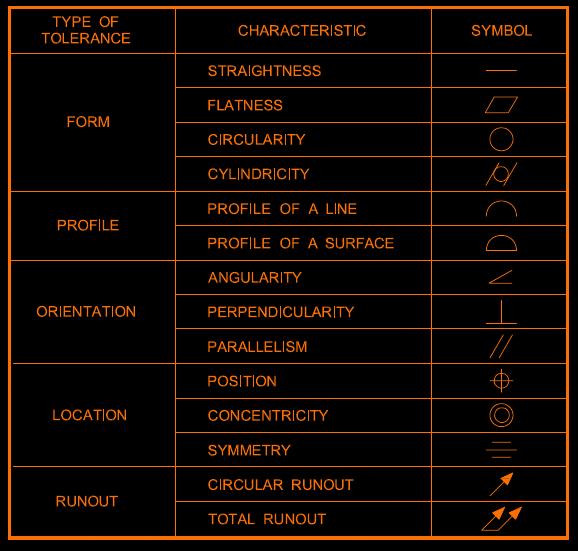
Za a iya ɗaukar faɗin faɗin a matsayin dukkan wuraren da ke kan saman da ke cikin layuka biyu masu layi ɗaya, wato matakin tushe da kuma matakin rufin. Ma'aunin nisan da ke tsakanin layukan shine faɗin faɗin saman gaba ɗaya. Wannan ma'aunin faɗin faɗin yawanci yana ɗauke da haƙuri kuma yana iya haɗawa da ayyana matsayi.
Misali, an bayyana juriyar lanƙwasa ga ma'auni uku na yau da kullun a cikin ƙayyadaddun ƙayyadaddun tarayya kamar yadda aka ƙaddara ta hanyar dabara mai zuwa:
■ Matsayin Dakin Gwaji AA = (40 + murabba'i mai kusurwa/25) x .000001" (mai gefe ɗaya)
■ Dubawa A Mataki A = Dakin gwaje-gwaje AA Mataki 2
■ Ɗakin Kayan Aiki Daraja B = Daraja AA x 4.
Ga faranti na saman da aka daidaita, muna ba da garantin jurewar lanƙwasa wanda ya wuce buƙatun wannan ƙayyadaddun bayanai. Baya ga lanƙwasa, ASME B89.3.7-2013 & Bayanin Tarayya GGG-P-463c suna magance batutuwa waɗanda suka haɗa da: daidaiton ma'auni mai maimaitawa, halayen kayan granites na farantin saman, ƙarewar saman, wurin tallafi, tauri, hanyoyin dubawa masu karɓuwa, shigar da abubuwan da aka saka a zare, da sauransu.
Faranti na saman dutse na ZHHIMG da faranti na duba dutse sun cika ko sun wuce duk buƙatun da aka tsara a cikin wannan ƙayyadaddun bayanai. A halin yanzu, babu takamaiman ƙayyadaddun bayanai game da faranti na kusurwa na dutse, daidai gwargwado, ko murabba'ai na farko.
Kuma zaku iya samun dabarun wasu ma'auni a cikinSAUKEWA.
Na farko, yana da mahimmanci a kiyaye tsabtar farantin. Kura mai lalata iska yawanci ita ce babbar hanyar lalacewa da tsagewa a kan farantin, domin yana da alaƙa da sanya kayan aiki da kuma saman taɓawa na ma'aunin. Na biyu, rufe farantin don kare shi daga ƙura da lalacewa. Ana iya tsawaita tsawon lokacin lalacewa ta hanyar rufe farantin lokacin da ba a amfani da shi, ta hanyar juya farantin lokaci-lokaci don kada yanki ɗaya ya yi amfani da shi fiye da kima, da kuma maye gurbin ma'aunin ƙarfe a kan ma'aunin ma'aunin ma'aunin ma'aunin carbide. Haka kuma, a guji sanya abinci ko abubuwan sha masu laushi a kan farantin. Lura cewa yawancin abubuwan sha masu laushi suna ɗauke da sinadarin carbonic ko phosphoric acid, wanda zai iya narkar da ma'adanai masu laushi kuma ya bar ƙananan ramuka a saman.
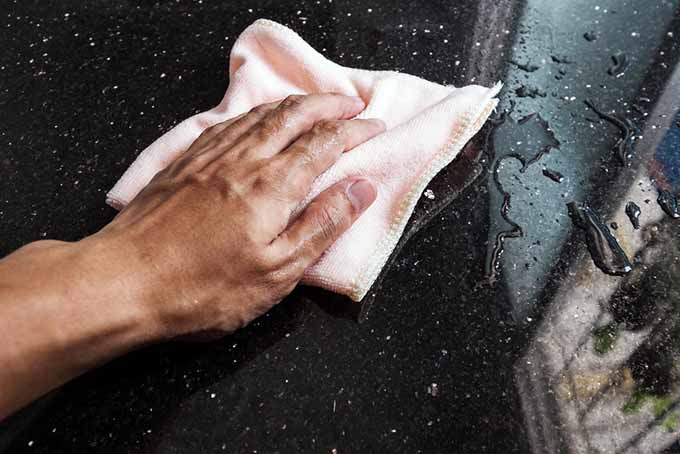
Wannan ya danganta da yadda ake amfani da farantin. Idan zai yiwu, muna ba da shawarar tsaftace farantin a farkon rana (ko aikin aiki) da kuma a ƙarshe. Idan farantin ya yi ƙazanta, musamman da ruwa mai mai ko mai, wataƙila a tsaftace shi nan da nan.
Tsaftace farantin akai-akai da ruwa ko kuma ZHHIMG mai tsabtace farantin saman ruwa mara ruwa. Zaɓin mafita na tsaftacewa yana da mahimmanci. Idan aka yi amfani da mai narkewa mai canzawa (acetone, lacquer thinner, barasa, da sauransu) tururin zai sanyaya saman, kuma ya ɓata shi. A wannan yanayin, ya zama dole a bar farantin ya daidaita kafin amfani da shi ko kuma kurakurai na aunawa za su faru.
Adadin lokacin da ake buƙata don faranti ya daidaita zai bambanta dangane da girman faranti, da kuma yawan sanyaya. Sa'a ɗaya ya isa ga ƙananan faranti. Ana iya buƙatar sa'o'i biyu ga manyan faranti. Idan aka yi amfani da injin tsabtace ruwa, za a kuma sami ɗan sanyi mai ƙafewa.
Farantin zai kuma riƙe ruwan, kuma wannan na iya haifar da tsatsa ta sassan ƙarfe da suka taɓa saman. Wasu masu tsaftacewa kuma za su bar wani abu mai mannewa bayan sun bushe, wanda zai jawo ƙurar iska, kuma a zahiri zai ƙara lalacewa, maimakon rage shi.
Wannan ya dogara da amfani da farantin da muhallinsa. Muna ba da shawarar cewa sabon farantin ko kayan haɗin granite daidai su sami cikakken gyarawa cikin shekara ɗaya da siyansa. Idan farantin saman granite zai ga amfani mai yawa, yana da kyau a rage wannan tazara zuwa watanni shida. Dubawa na wata-wata don kurakuran aunawa akai-akai ta amfani da matakin lantarki, ko makamancin haka zai nuna duk wani tabo da ke tasowa kuma yana ɗaukar mintuna kaɗan kawai don yin aiki. Bayan an tantance sakamakon sake daidaitawa na farko, ana iya tsawaita tazara ko gajarta kamar yadda tsarin ingancin ciki ya ba da izini ko buƙata.
Za mu iya bayar da sabis don taimaka muku duba da daidaita farantin saman granite ɗinku.

Akwai dalilai da yawa da ke haifar da bambance-bambance tsakanin calibrations:
- An wanke saman da maganin zafi ko sanyi kafin a daidaita shi, kuma ba a ba shi isasshen lokaci don daidaita shi ba
- Farantin ba shi da goyon baya yadda ya kamata
- Canjin yanayin zafi
- Zane-zane
- Hasken rana kai tsaye ko wani zafi mai haske a saman farantin. Tabbatar cewa hasken da ke sama ba ya dumama saman.
- Bambance-bambance a cikin yanayin zafin jiki na tsaye tsakanin hunturu da bazara (Idan zai yiwu, san zafin yanayin yanayin tsayi a lokacin da aka yi ma'aunin.)
- Farantin ba a ba da isasshen lokaci don daidaita yanayin bayan jigilar kaya ba
- Amfani da kayan aikin dubawa mara kyau ko amfani da kayan aikin da ba a daidaita su ba
- Canjin saman da ya faru sakamakon lalacewa
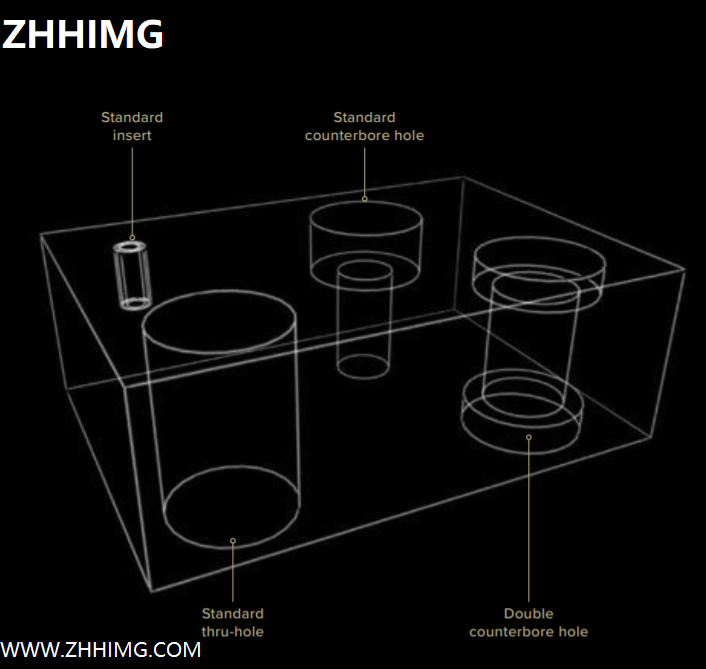
Nawa nau'ikan ramuka a kan granite daidai?
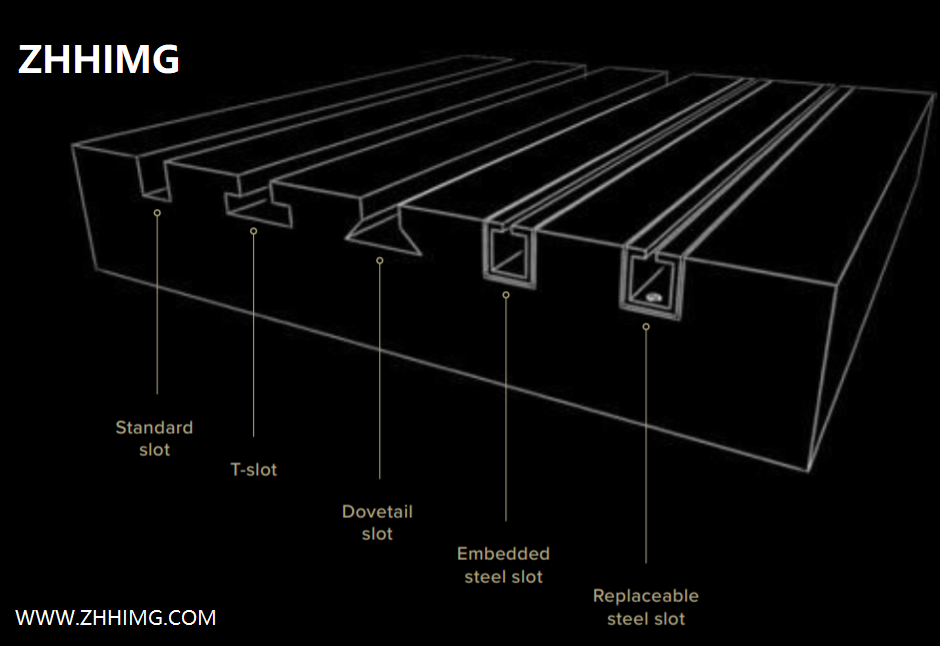
Ramummuka akan Daidaitattun Abubuwan Granite
Ga masana'antu da yawa, ɗakunan dubawa da dakunan gwaje-gwaje, ana dogara da faranti na dutse masu daidaito a matsayin tushen aunawa daidai. Saboda kowace ma'auni ta layi ta dogara ne akan madaidaicin saman tunani wanda daga ciki ake ɗaukar ma'auni na ƙarshe, faranti na saman suna ba da mafi kyawun matakin tunani don duba aiki da tsara shi kafin a yi aiki. Hakanan su ne tushen da suka dace don yin ma'aunin tsayi da saman aunawa. Bugu da ƙari, babban matakin lanƙwasa, kwanciyar hankali, inganci gabaɗaya da aikin yi ya sa su zama kyakkyawan zaɓi don hawa tsarin aunawa na injiniya, lantarki da na gani mai zurfi. Ga kowane ɗayan waɗannan hanyoyin aunawa, yana da mahimmanci a kiyaye faranti na saman daidaitacce.
Maimaita Ma'auni da Faɗi
Ma'aunin lanƙwasa da maimaitawa suna da matuƙar muhimmanci don tabbatar da daidaiton saman. Za a iya ɗaukar lanƙwasa a matsayin dukkan maki a saman da ke cikin layuka biyu masu layi ɗaya, matakin tushe da kuma matakin rufin. Ma'aunin nisan da ke tsakanin jiragen shine cikakken lanƙwasa na saman. Wannan ma'aunin lanƙwasa yawanci yana ɗauke da haƙuri kuma yana iya haɗawa da ayyana maki.
An bayyana haƙurin latency na maki uku na yau da kullun a cikin ƙayyadaddun ƙayyadaddun tarayya kamar yadda aka ƙaddara ta hanyar dabara mai zuwa:
DIN Standard, GB Standard, ASME Standard, JJS Standard... ƙasa daban-daban tare da matsayi daban-daban...
Ƙarin bayani game da Standard.
Baya ga lanƙwasa, dole ne a tabbatar da cewa za a iya maimaitawa. Ma'aunin maimaitawa aunawa ne na yankunan lanƙwasa na gida. Ma'auni ne da aka ɗauka a ko'ina a saman faranti wanda zai maimaita a cikin haƙurin da aka ambata. Sarrafa lanƙwasa na yankin zuwa ga juriya mai ƙarfi fiye da lanƙwasa gabaɗaya yana tabbatar da canji a hankali a cikin yanayin lanƙwasa na saman, ta haka rage kurakuran gida.
Domin tabbatar da cewa farantin saman ya dace da ƙayyadaddun ma'auni na lanƙwasa da maimaitawa, masana'antun faranti na saman dutse ya kamata su yi amfani da Bayanin Tarayya GGG-P-463c a matsayin tushen ƙayyadaddun su. Wannan ma'auni yana magance daidaiton ma'auni mai maimaitawa, halayen kayan granite na farantin saman, ƙarewar saman, wurin tallafi, tauri, hanyoyin dubawa da shigarwa na zare masu dacewa.
Duba Daidaiton Faranti
Ta hanyar bin wasu ƙa'idodi masu sauƙi, saka hannun jari a cikin farantin saman dutse ya kamata ya daɗe na tsawon shekaru. Dangane da amfani da farantin, yanayin shago da kuma daidaiton da ake buƙata, yawan duba daidaiton farantin saman ya bambanta. Babban ƙa'ida ita ce sabon farantin ya sami cikakken gyarawa cikin shekara ɗaya da siyan sa. Idan ana amfani da farantin akai-akai, yana da kyau a rage wannan lokacin zuwa watanni shida.
Kafin farantin saman ya lalace fiye da yadda aka tsara don faɗin faɗinsa, zai nuna ginshiƙai da suka lalace ko kuma suka yi kauri. Dubawa na wata-wata don kurakuran aunawa da aka maimaita ta amfani da na'urar auna karatu mai maimaitawa zai gano wuraren lalacewa. Na'urar auna karatu mai maimaitawa kayan aiki ne mai inganci wanda ke gano kuskuren gida kuma ana iya nuna shi akan na'urar ƙara girman lantarki mai girma.
Shirin dubawa mai inganci ya kamata ya haɗa da duba akai-akai tare da na'urar sarrafa iska ta atomatik, wanda ke samar da ainihin daidaiton lanƙwasa da za a iya ganowa zuwa Cibiyar Ma'auni da Fasaha ta Ƙasa (NIST). Ana buƙatar cikakken daidaitawa daga masana'anta ko kamfani mai zaman kansa lokaci zuwa lokaci.
Bambanci Tsakanin Daidaitawa
A wasu lokuta, akwai bambance-bambance tsakanin daidaita farantin saman. Wani lokaci abubuwa kamar canjin saman da ya samo asali daga lalacewa, rashin amfani da kayan aikin dubawa daidai ko amfani da kayan aikin da ba a daidaita ba na iya haifar da waɗannan bambance-bambancen. Duk da haka, abubuwa biyu da suka fi yawa sune zafin jiki da tallafi.
Ɗaya daga cikin mahimman abubuwan da ke haifar da zafi shine zafin jiki. Misali, ana iya wanke saman da ruwan zafi ko sanyi kafin a daidaita shi kuma ba a ba shi isasshen lokaci don daidaita yanayin ba. Sauran abubuwan da ke haifar da canjin zafin jiki sun haɗa da iska mai sanyi ko zafi, hasken rana kai tsaye, hasken sama ko wasu hanyoyin zafi mai haske a saman farantin.
Haka kuma akwai iya samun bambance-bambance a yanayin zafin jiki na tsaye tsakanin hunturu da bazara. A wasu lokuta, ba a ba da isasshen lokaci ga farantin don daidaita yanayin bayan jigilar kaya ba. Yana da kyau a yi rikodin zafin jiki na tsaye a lokacin da aka yi ma'aunin.
Wani abu da ya zama ruwan dare gama gari da ke haifar da bambancin daidaitawa shine farantin da ba a tallafa masa yadda ya kamata ba. Ya kamata a tallafa farantin saman a wurare uku, wanda ya fi dacewa a sanya shi kashi 20% na tsawonsa daga ƙarshen farantin. Ya kamata a sanya tallafi biyu a cikin kashi 20% na faɗinsa daga ɓangarorin da suka yi tsayi, kuma sauran tallafin ya kamata a tsakiya.
Maki uku ne kawai za su iya tsayawa a kan komai sai dai saman da ya dace. Ƙoƙarin tallafawa farantin a fiye da maki uku zai sa farantin ya sami goyon bayansa daga haɗuwa daban-daban na maki uku, waɗanda ba za su zama maki uku iri ɗaya da aka tallafa masa a lokacin samarwa ba. Wannan zai haifar da kurakurai yayin da farantin ya karkace don dacewa da sabon tsarin tallafi. Yi la'akari da amfani da sandunan ƙarfe tare da sandunan tallafi waɗanda aka tsara don daidaita su da wuraren tallafi masu dacewa. Ana samun tsayayyun tsaye don wannan dalili daga masana'antar farantin saman.
Idan farantin yana da kyau, daidaita daidai gwargwado yana da mahimmanci ne kawai idan aikace-aikacen ya ƙayyade shi. Daidaitawa ba lallai bane don kiyaye daidaiton farantin da aka tallafa da kyau.
Tsawaita Rayuwar Farantin
Bin wasu ƙa'idodi zai rage lalacewa a kan farantin saman dutse kuma a ƙarshe, zai tsawaita rayuwarsa.
Da farko, yana da mahimmanci a kiyaye faranti mai tsafta. Kura mai gogewa daga iska yawanci ita ce babbar hanyar lalacewa da tsagewa a kan faranti, domin yana da alaƙa da kayan aiki da kuma saman ma'aunin da ke taɓawa.
Haka kuma yana da muhimmanci a rufe faranti domin kare su daga ƙura da lalacewa. Ana iya tsawaita tsawon lokacin lalacewa ta hanyar rufe faranti lokacin da ba a amfani da su.
A juya farantin lokaci-lokaci don kada a yi amfani da shi fiye da kima a wuri ɗaya. Haka kuma, ana ba da shawarar a maye gurbin murfin ƙarfe da faifan carbide a kan ma'aunin.
A guji sanya abinci ko abin sha mai laushi a kan faranti. Yawancin abubuwan sha masu laushi suna ɗauke da sinadarin carbonic ko phosphoric acid, wanda zai iya narkar da ma'adanai masu laushi kuma ya bar ƙananan ramuka a saman.
Inda za a Komawa
Idan farantin saman dutse yana buƙatar sake fasalinsa, yi la'akari da ko za a yi wannan aikin a wurin ko a wurin daidaitawa. Ya fi kyau a sake haɗa farantin a masana'anta ko wani wuri na musamman. Amma, idan farantin bai yi laushi sosai ba, yawanci a cikin inci 0.001 na juriyar da ake buƙata, za a iya sake haɗa shi a wurin. Idan farantin ya yi laushi har ya wuce inci 0.001 ba tare da juriya ba, ko kuma idan ya yi rauni ko ya yi rauni sosai, to ya kamata a aika shi zuwa masana'anta don niƙa kafin a sake haɗa shi.
Wurin daidaitawa yana da kayan aiki da tsarin masana'anta wanda ke ba da mafi kyawun yanayi don daidaita farantin da sake yin aiki idan ya cancanta.
Ya kamata a yi taka tsantsan wajen zaɓar ƙwararren masani kan gyaran fuska da gyaran fuska a wurin. Nemi izini kuma a tabbatar da cewa kayan aikin da ma'aikacin zai yi amfani da su suna da ma'aunin da za a iya ganowa. Kwarewa kuma muhimmin abu ne, domin yana ɗaukar shekaru da yawa kafin a koyi yadda ake daidaita ma'aunin dutse daidai.
Ma'aunin mahimmanci yana farawa da farantin saman dutse mai daidaito a matsayin tushe. Ta hanyar tabbatar da ingantaccen ma'auni ta amfani da farantin saman da aka daidaita yadda ya kamata, masana'antun suna da ɗaya daga cikin mahimman kayan aikin don ma'auni masu inganci da ingantattun sassa.Q
Jerin Abubuwan da Za a Yi Don Bambancin Daidaitawa
1. An wanke saman da ruwan zafi ko sanyi kafin a daidaita shi kuma ba a ba shi isasshen lokaci don daidaita shi ba.
2. Farantin ba a tallafa masa yadda ya kamata ba.
3. Sauyin yanayin zafi.
4. Zane-zane.
5. Hasken rana kai tsaye ko wani zafi mai haske a saman farantin. Tabbatar cewa hasken da ke sama ba ya dumama saman.
6. Bambancin yanayin zafin jiki tsakanin hunturu da bazara. Idan zai yiwu, san zafin yanayin zafin jiki a tsaye a lokacin da aka yi gyaran.
7. Faranti bai ba da isasshen lokaci don daidaita yanayin bayan jigilar kaya ba.
8. Amfani da kayan aikin dubawa mara kyau ko amfani da kayan aikin da ba a daidaita su ba.
9. Canjin yanayi sakamakon lalacewa.
Nasihu kan Fasaha
- Domin kowace ma'auni ta layi ta dogara ne akan madaidaicin saman tunani wanda daga ciki ake ɗaukar ma'auni na ƙarshe, faranti na saman suna ba da mafi kyawun tsarin tunani don duba aiki da tsara shi kafin a yi aiki.
- Sarrafa lanƙwasa yankin gida zuwa ga juriya mai ƙarfi fiye da lanƙwasa gabaɗaya yana tabbatar da canji a hankali a cikin yanayin lanƙwasa saman, ta haka rage kurakuran gida.
- Shirin dubawa mai inganci ya kamata ya haɗa da duba akai-akai tare da na'urar sarrafa iska ta atomatik, wanda ke samar da ainihin daidaiton lanƙwasa da za a iya ganowa ga Hukumar Kula da Inshorar Ƙasa.
Daga cikin ƙwayoyin ma'adinai da suka samar da granite, fiye da kashi 90% na su ne feldspar da quartz, waɗanda feldspar ya fi yawa. Feldspar galibi fari ne, launin toka, kuma ja ne na nama, kuma quartz galibi fari ne mara launi ko launin toka, wanda shine asalin launin granite. Feldspar da quartz ma'adanai ne masu tauri, kuma yana da wuya a motsa da wuka ta ƙarfe. Dangane da ɗigon duhu a cikin granite, galibi baƙi mica, akwai wasu ma'adanai. Kodayake biotite yana da laushi kaɗan, ikonsa na tsayayya da damuwa ba shi da rauni, kuma a lokaci guda suna da ƙaramin adadin granite, sau da yawa ƙasa da 10%. Wannan shine yanayin kayan da granite yake da ƙarfi musamman.
Wani dalili kuma da ya sa granite yake da ƙarfi shi ne cewa ƙwayoyin ma'adinansa suna daure sosai da juna kuma suna cikin juna. Sau da yawa ramukan suna ƙasa da kashi 1% na jimlar girman dutsen. Wannan yana ba granite ikon jure matsin lamba mai ƙarfi kuma danshi ba ya shiga cikin sauƙi.
An yi sassan granite da dutse ba tare da tsatsa ba, juriya ga acid da alkali, juriya mai kyau ga lalacewa da tsawon rai, babu kulawa ta musamman. Ana amfani da sassan daidaito na granite galibi a cikin kayan aikin masana'antar injina. Saboda haka, ana kiran su sassan daidaito na granite ko sassan granite. Halayen sassan daidaito na granite iri ɗaya ne da na dandamalin granite. Gabatarwa ga kayan aiki da auna sassan daidaito na granite: Fasahar injina ta daidai da fasahar injina ta ƙananan hanyoyi ne masu mahimmanci na ci gaba a masana'antar kera injina, kuma sun zama muhimmiyar alama don auna matakin fasaha mai zurfi. Ci gaban fasahar zamani da masana'antar tsaro ba za a iya raba su da fasahar injina ta daidai da fasahar injina ta ƙananan ba. Ana iya zame sassan granite cikin sauƙi a cikin ma'auni, ba tare da tsayawa ba. Ma'aunin saman aiki, ƙagaggun gabaɗaya ba sa shafar daidaiton ma'auni. Ana buƙatar tsara sassan granite kuma a samar da su bisa ga buƙatun ɓangaren buƙata.
Filin aikace-aikacen:
Kamar yadda muka sani, ƙarin injuna da kayan aiki suna zaɓar daidaitattun abubuwan da aka gyara na dutse.
Ana amfani da sassan granite don motsi mai motsi, injinan layi, cmm, cnc, injin laser...
Barka da zuwa tuntube mu don ƙarin bayani.
An yi na'urorin auna dutse da kayan aikin injiniya na granite da babban dutse mai launin Jinan Black granite. Saboda daidaiton su, tsawon lokaci, kyakkyawan kwanciyar hankali da juriyar tsatsa, ana ƙara amfani da su wajen duba samfura a masana'antar zamani da kuma fannoni kamar sararin samaniya da binciken kimiyya.
Fa'idodi
-----Tauri sau biyu kamar ƙarfe mai siminti;
-----Ƙarancin canje-canje na girma yana faruwa ne saboda canjin yanayin zafi;
----Ba a samun matsala, don haka babu katsewar aiki;
----Ba ya dauke da burrs ko protrusions saboda tsarin hatsi mai kyau da kuma rashin mannewa sosai, wanda ke tabbatar da babban matakin lanƙwasa a tsawon tsawon rai kuma ba ya haifar da lalacewa ga wasu sassa ko kayan aiki;
----Aiki mara matsala don amfani da kayan maganadisu;
---- Tsawon rai da kuma rashin tsatsa, wanda hakan ke haifar da ƙarancin kuɗin kulawa.
An daidaita faranti na saman dutse daidai gwargwado zuwa babban matakin lanƙwasa don cimma daidaito kuma ana amfani da su azaman tushe don hawa tsarin ma'aunin injiniya, lantarki da na gani mai inganci.
Wasu daga cikin siffofi na musamman na farantin saman granite:
Daidaito a cikin Tauri;
Daidai a ƙarƙashin kaya Yanayi;
Mai Shafar Girgiza;
Mai sauƙin tsaftacewa;
Mai juriya ga naɗewa;
Ƙananan Porosity;
Ba ya gogewa;
Ba Mai Maganadisu ba
Abũbuwan amfãni na Farantin Dutse
Da farko, dutsen bayan dogon lokaci na tsufa na halitta, tsari iri ɗaya, mafi ƙarancin ma'auni, damuwa ta ciki ta ɓace gaba ɗaya, ba ta nakasa ba, don haka daidaiton yana da girma.
Na biyu, ba za a sami karyewa ba, ba a ƙarƙashin yanayin zafin jiki mai ɗorewa ba, a zafin ɗaki kuma za a iya kiyaye daidaiton ma'aunin zafin jiki.
Na uku, ba maganadisu ba, aunawa na iya zama motsi mai santsi, babu jin tsoro, ba tare da danshi ya shafe shi ba, jirgin yana da daidaito.
Hudu, taurin yana da kyau, taurin yana da yawa, juriyar gogewa tana da ƙarfi.
Guda biyar, ba sa jin tsoron zaizayar ruwa mai acid, ba za su yi tsatsa ba, ba sa buƙatar fenti mai, ba sa da sauƙin mannewa, kulawa, sauƙin kulawa, tsawon rai.
Me yasa za a zaɓi tushen dutse maimakon gadon injin ƙarfe na siminti?
1. Tushen injinan granite zai iya kiyaye daidaito mafi girma fiye da tushen injinan ƙarfe. Tushen injinan ƙarfe na iya shafar yanayin zafi da danshi cikin sauƙi amma tushen injinan granite ba zai yi ba;
2. Tare da girman injin granite da kuma tushen ƙarfe mai siminti iri ɗaya, tushen injin granite ya fi ƙarfe mai siminti inganci;
3. Tushen injin granite na musamman ya fi sauƙin gamawa fiye da tushen injin ƙarfe na siminti.
Faranti na saman dutse muhimman kayan aiki ne a dakunan gwaje-gwaje a faɗin ƙasar. Faɗin farantin saman da aka daidaita, mai faɗi sosai yana ba masu duba damar amfani da su a matsayin tushen dubawa da daidaita kayan aiki. Ba tare da kwanciyar hankali da faranti na saman suka bayar ba, yawancin sassan da aka jure wa juriya a fannoni daban-daban na fasaha da likitanci zai fi wahala, idan ba zai yiwu ba, a ƙera su daidai. Tabbas, don amfani da tubalin saman dutse don daidaita da duba wasu kayayyaki da kayan aiki, dole ne a tantance daidaiton granite ɗin da kansa. Masu amfani za su iya daidaita farantin saman dutse don tabbatar da daidaitonsa.
Tsaftace farantin saman granite kafin a daidaita shi. Zuba ƙaramin adadin mai tsabtace farantin saman a kan kyalle mai tsabta da laushi sannan a goge saman granite ɗin. Nan da nan sai a busar da mai tsabtace farantin saman da busasshen kyalle. Kada a bar ruwan tsaftacewa ya bushe da iska.
Sanya ma'aunin aunawa mai maimaitawa a tsakiyar farantin saman granite.
Sifili ma'aunin aunawa mai maimaitawa zuwa saman farantin granite.
Matsar da ma'aunin a hankali a saman dutse. Ka lura da alamar ma'aunin kuma ka yi rikodin kololuwar duk wani bambancin tsayi yayin da kake motsa kayan aikin a kan farantin.
Kwatanta bambancin lanƙwasa a saman farantin da juriyar farantin saman ku, wanda ya bambanta dangane da girman farantin da kuma matakin lanƙwasa na dutse. Duba ƙayyadaddun bayanai na tarayya GGG-P-463c (duba Albarkatu) don tantance ko farantin ku ya cika buƙatun lanƙwasa don girmansa da matsayinsa. Bambancin da ke tsakanin mafi girman matsayi a kan farantin da mafi ƙanƙantar matsayi a kan farantin shine ma'aunin lanƙwasa.
Duba cewa mafi girman bambance-bambancen zurfin da ke kan saman farantin ya faɗi cikin ƙayyadaddun maimaitawa don farantin mai girman wannan da matakinsa. Duba ƙayyadaddun bayanai na tarayya GGG-P-463c (duba Albarkatu) don tantance ko farantin ku ya cika buƙatun maimaitawa don girmansa. Ki ƙi farantin saman idan ko da maki ɗaya ya gaza buƙatun maimaitawa.
A daina amfani da farantin saman granite wanda bai cika buƙatun tarayya ba. A mayar da farantin ga masana'anta ko kuma ga kamfanin saman granite don a sake goge tubalin don ya cika ƙa'idodi.
Shawara
Yi gyare-gyare na yau da kullun aƙalla sau ɗaya a shekara, kodayake faranti na saman granite waɗanda ake amfani da su sosai ya kamata a daidaita su akai-akai.
Ana yin gyaran da za a iya rikodinsa a cikin masana'antu ko wuraren dubawa ta hanyar tabbatar da inganci ko mai siyar da ayyukan daidaitawa na waje, kodayake kowa zai iya amfani da ma'aunin aunawa na maimaitawa don duba farantin saman ba bisa ƙa'ida ba kafin amfani.
Tarihin Farko na Faranti na Dutse
Kafin Yaƙin Duniya na Biyu, masana'antun sun yi amfani da Faranti na Karfe don duba sassan. A lokacin Yaƙin Duniya na Biyu buƙatar ƙarfe ta ƙaru sosai, kuma an narkar da Faranti na Karfe da yawa. An buƙaci maye gurbinsu, kuma Granite ya zama kayan da aka fi so saboda kyawun halayensa na metrology.
Fa'idodi da yawa na granite fiye da ƙarfe sun bayyana. Granite ya fi wahala, kodayake ya fi rauni kuma yana iya fashewa. Za ku iya karkatar da Granite zuwa mafi girman lanƙwasa da sauri fiye da ƙarfe. Granite kuma yana da kayan da ake so na ƙarancin faɗaɗa zafi idan aka kwatanta da ƙarfe. Bugu da ƙari, idan farantin ƙarfe yana buƙatar gyara, dole ne masu fasaha su goge shi da hannu waɗanda suka yi amfani da ƙwarewarsu wajen sake gina kayan aikin injin.
A gefe guda, har yanzu ana amfani da wasu Faranti na Karfe a yau.
Properties na Faranti na Dutse
Granite dutse ne mai kama da dutse wanda fashewar aman wuta ta haifar. Idan aka kwatanta, marmara dutse ne mai kama da dutse mai kama da dutse. Don amfani da ilimin metrology, dutse da aka zaɓa ya kamata ya cika takamaiman buƙatun da aka bayyana a cikin Bayanin Tarayya GGG-P-463c, daga yanzu ana kiransa Bayanan Fed, kuma musamman, Sashe na 3.1 3.1 Daga cikin Bayanan Fed, granite ya kamata ya zama ɗan laushi zuwa matsakaici.
Granite abu ne mai tauri, amma taurinsa ya bambanta saboda dalilai da dama. Ƙwararren ma'aikacin faranti na granite zai iya kimanta tauri ta launinsa wanda hakan ke nuna yawan quartz ɗinsa. Tauri na granite wani abu ne da aka ƙayyade a wani ɓangare ta hanyar adadin quartz da rashin mica. Granites ja da ruwan hoda galibi suna da mafi wahala, launin toka matsakaici ne, kuma baƙi sune mafi laushi.
Ana amfani da Modulus of Elasticity na Young don bayyana sassauci ko alamar taurin dutsen. Granite mai launin ruwan hoda yana da matsakaicin maki 3-5 a sikelin, launin toka maki 5-7 da baƙi maki 7-10. Ƙaramin adadin, granite ɗin yakan yi tauri. Girman adadin, granite ɗin zai yi laushi kuma ya fi sassauƙa. Yana da mahimmanci a san taurin Granite lokacin zaɓar kauri da ake buƙata don matakan haƙuri da nauyin sassa da ma'auni da aka sanya a kansa.
A zamanin da akwai ƙwararrun injina na gaske, waɗanda aka san su da ƙananan littattafan teburin trig a aljihun rigarsu, ana ɗaukar granite baƙi a matsayin "Mafi Kyau." Mafi Kyau an ayyana shi a matsayin nau'in da ke ba da juriya ga lalacewa ko kuma ya fi wahala. Wani koma-baya shi ne cewa granite masu tauri suna da sauƙin fashewa ko lalacewa. Masana injina sun gamsu cewa granite baƙi shine mafi kyau har wasu masana'antun granite ruwan hoda suka rina su baƙi.
Ni da kaina na shaida wani faranti da aka jefar daga kan cokali mai yatsu lokacin da aka motsa shi daga wurin ajiya. Faranti ya faɗi ƙasa ya rabu biyu yana bayyana ainihin launin ruwan hoda. Yi hankali idan kana shirin siyan dutse baƙi daga China. Muna ba da shawarar ka ɓatar da kuɗinka ta wata hanya. Faranti na granite na iya bambanta da tauri a cikin kansa. Jerin quartz na iya zama da wahala fiye da sauran farantin saman. Layer na gabbro baƙi na iya sa yanki ya yi laushi sosai. Masu ƙwarewa da ƙwarewa a gyaran farantin saman sun san yadda ake sarrafa waɗannan wurare masu laushi.
Maki na Farantin Fuskar
Akwai nau'ikan faranti guda huɗu na saman. AA na dakin gwaje-gwaje na AA da A, Aji na Duba Ɗaki na B, kuma na huɗu shine Aji na Bita. AA na aji na AA sune mafi faɗi tare da juriyar lanƙwasa fiye da inci 0.00001 ga farantin AA na AA. Maki na bita shine mafi ƙarancin lanƙwasa kuma kamar yadda sunan ya nuna, an yi su ne don amfani a ɗakunan kayan aiki. Inda a matsayin AA, A da Aji na B an yi su ne don amfani a cikin dakin gwaje-gwajen dubawa ko kula da inganci.
PGwajin Roper Don Daidaita Farantin Sama
Kullum ina gaya wa abokan cinikina cewa zan iya fitar da duk wani yaro ɗan shekara 10 daga cocina in koya musu cikin 'yan kwanaki kaɗan yadda ake gwada faranti. Ba abu ne mai wahala ba. Yana buƙatar wata dabara don yin aikin da sauri, dabarun da mutum zai koya ta hanyar lokaci da maimaitawa da yawa. Ya kamata in sanar da ku, kuma ba zan iya jaddadawa sosai ba, Fed Spec GGG-P-463c BA tsarin daidaitawa bane! Ƙarin bayani game da hakan daga baya.
Daidaita lanƙwasa gabaɗaya (Matsakaicin Fane) da kuma duba maimaituwa (lalacewar gida) dole ne a yi bisa ga ƙayyadaddun bayanai na Fed. Banda wannan kawai shine tare da ƙananan faranti inda ake buƙatar maimaituwa kawai.
Haka kuma, kamar yadda yake da mahimmanci kamar sauran gwaje-gwajen, gwajin yanayin zafi ne. (Duba Delta T a ƙasa)
Hoto na 1
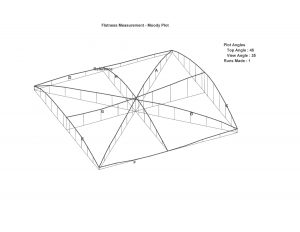
Gwajin Flatness yana da hanyoyi guda 4 da aka amince da su. Matakan lantarki, autocollimation, laser da na'urar da aka sani da plane locator. Muna amfani da matakan lantarki ne kawai saboda sune hanya mafi daidaito da sauri saboda dalilai da yawa.
Na'urorin Laser da autocollimators suna amfani da madaidaicin hasken haske a matsayin ma'auni. Mutum yana auna madaidaicin farantin saman granite ta hanyar kwatanta bambancin da ke tsakanin farantin saman da hasken. Ta hanyar ɗaukar madaidaicin hasken, buga shi a kan abin da ke nuna haske yayin da yake motsa abin da ke nuna haske a ƙasan farantin saman, nisan da ke tsakanin hasken da aka fitar da haske da kuma abin da ke dawowa shine ma'aunin madaidaiciya.
Ga matsalar da ke tattare da wannan hanyar. Girgiza, zafin jiki na yanayi, kasa da lebur ko kuma abin da ya karce, gurɓatawa a cikin iska, da kuma motsin iska (currents). Duk waɗannan suna ba da ƙarin abubuwan da ke haifar da kuskure. Bugu da ƙari, gudummawar kuskuren mai aiki daga duba tare da autocollimator ya fi girma.
Mai amfani da autocollimator mai ƙwarewa zai iya yin ma'auni masu daidaito amma har yanzu yana fuskantar matsaloli game da daidaiton karatun musamman a tsawon nisa yayin da hasken ke ƙara faɗaɗa ko kuma ya zama ɗan duhu. Haka kuma, abin da ba shi da cikakkiyar faɗi da kuma tsawon yini na leƙen ruwan tabarau yana haifar da ƙarin kurakurai.
Na'urar gano jirgin sama wauta ce kawai. Wannan na'urar tana amfani da madaidaicin haske (idan aka kwatanta da madaidaicin haske ko hasken laser) a matsayin ma'auni. Ba wai kawai na'urar injin tana amfani da alamar ƙudurin inci 20 kawai ba, har ma rashin daidaiton sandar da kayan da ba su yi kama da juna suna ƙara yawan kurakurai a aunawa. A ra'ayinmu, kodayake hanyar ta dace, babu wani dakin gwaje-gwaje mai ƙwarewa da zai taɓa amfani da na'urar gano jirgin sama a matsayin kayan aikin bincike na ƙarshe.
Matakan lantarki suna amfani da nauyi a matsayin ma'auninsu. Matakan lantarki daban-daban ba sa shafar girgiza. Suna da ƙuduri ƙasa da daƙiƙa .1 kuma ma'auni suna da sauri, daidai kuma akwai ƙarancin gudummawar kuskure daga ƙwararren mai aiki. Babu Plane Locators ko autocollimators da ke ba da yanayin ƙasa da aka samar ta kwamfuta (Hoto na 1) ko zane-zanen isometric (Hoto na 2) na saman.
Hoto na 2
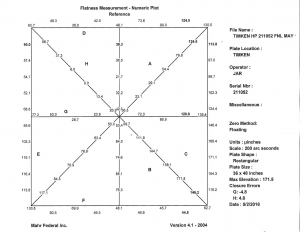
Gwajin Daidaitaccen Daidaiton Fuskar
Gwajin da ya dace da lanƙwasa saman yana da matuƙar muhimmanci a cikin wannan takarda da na sanya shi a farko. Kamar yadda aka faɗa a baya, Fed Spec. GGG-p-463c BA hanyar daidaitawa ba ce. Yana aiki a matsayin jagora ga fannoni da yawa na granite mai daraja ta metrology wanda mai siyan sa shine kowace Hukumar Gwamnatin Tarayya, wanda ya haɗa da hanyoyin gwaji da haƙuri ko maki. Idan ɗan kwangila ya yi iƙirarin cewa ya bi ka'idodin Fed, to ƙimar lanƙwasa za ta kasance ta hanyar Hanyar Moody.
Moody mutum ne tun a shekarun 1950 wanda ya ƙirƙiro hanyar lissafi don tantance daidaiton layukan da aka gwada, ko suna kusa da juna a wuri ɗaya. Babu abin da ya canza. Allied Signal ya yi ƙoƙarin inganta hanyar lissafi amma ya kammala da cewa bambance-bambancen sun yi ƙanƙanta sosai don haka bai cancanci ƙoƙarin ba.
Idan mai kwangilar farantin saman yana amfani da Matakan Lantarki ko Laser, yana amfani da kwamfuta don taimaka masa wajen ƙididdigewa. Ba tare da kwamfuta ba, mai aikin injiniyan zai buƙaci ya ƙididdige karatun da hannu. A zahiri, ba sa yin hakan. Yana ɗaukar lokaci mai tsawo kuma a gaskiya yana iya zama ƙalubale. A cikin gwajin lanƙwasa ta amfani da Hanyar Moody, mai aikin injiniyan yana gwada layuka takwas a cikin tsarin Union Jack don daidaita shi.
Hanyar Moody
Hanyar Moody hanya ce ta lissafi don tantance ko layukan takwas suna kan jirgin sama ɗaya. In ba haka ba, kawai kuna da layuka 8 madaidaiciya waɗanda ƙila su kasance ko ba za su kasance a kan jirgin sama ɗaya ba ko kusa da su. Bugu da ƙari, wani ɗan kwangila yana iƙirarin bin Fed Spec, kuma yana amfani da autocollimation, shidole nesamar da shafuka takwas na bayanai. Shafi ɗaya ga kowane layi da aka duba don tabbatar da gwajinsa, gyara, ko duka biyun. In ba haka ba, ɗan kwangilar bai san ainihin ƙimar fitness ba.
Ina da tabbacin idan kai ɗaya ne daga cikin waɗanda ɗan kwangila ke daidaita farantinka ta amfani da autocollimation, ba ka taɓa ganin waɗannan shafukan ba! Hoto na 3 misali ne naɗaya kawaiShafi na takwas da ake buƙata don ƙididdige daidaiton gabaɗaya. Ɗaya daga cikin alamun wannan jahilci da mugunta shine idan rahoton ku yana da kyawawan lambobi masu zagaye. Misali, 200, 400, 650, da sauransu. Ƙimar da aka ƙididdige ta yadda ya kamata lamba ce ta gaske. Misali 325.4 u A. Lokacin da mai kwangilar ya yi amfani da Hanyar Moody na lissafi, kuma mai fasaha ya ƙididdige ƙimar da hannu, ya kamata ku sami shafuka takwas na lissafi da makircin isometric. Tsarin isometric yana nuna tsayi daban-daban tare da layuka daban-daban da kuma tsawon nisan da ke raba wuraren da aka zaɓa.
Hoto na 3(Yana ɗaukar shafuka takwas kamar wannan don ƙididdige latti da hannu. Tabbatar ka tambayi dalilin da yasa ba ka samun wannan ba idan ɗan kwangilarka yana amfani da autocollimation!)
Hoto na 4
Masu fasaha na Ma'aunin Girma suna amfani da matakai daban-daban (Hoto na 4) a matsayin na'urori da aka fi so don auna canje-canje na mintuna a kusurwa daga tashar aunawa zuwa tasha. Matakan suna da ƙuduri zuwa daƙiƙa .1 (Inci 5 u ta amfani da sled mai inci 4) suna da matuƙar karko, girgiza ba ta shafar su, nisan da aka auna, kwararar iska, gajiyar mai aiki, gurɓatar iska ko duk wata matsala da ke cikin wasu na'urori ba. Ƙara taimakon kwamfuta, kuma aikin ya zama da sauri, yana samar da zane-zanen yanayi da isometric wanda ke tabbatar da tabbatarwa kuma mafi mahimmanci gyara.
Gwajin Maimaitawa Mai Kyau
Maimaita karatu ko maimaitawa shine gwaji mafi mahimmanci. Kayan aikin da muke amfani da su don yin gwajin maimaitawa shine na'urar karantawa maimaitawa, LVDT da kuma na'urar ƙarawa da ake buƙata don karatu mai ƙuduri mai girma. Mun saita na'urar ƙarawa ta LVDT zuwa mafi ƙarancin ƙuduri na Inci 10 u ko Inci 5 u don faranti masu inganci.
Amfani da ma'aunin inji mai ƙudurin inci 20 u kawai ba shi da amfani idan kuna ƙoƙarin gwada buƙatar maimaitawa ta inci 35 u. Alamu suna da rashin tabbas na inci 40 u! Saitin maimaita karatu yana kwaikwayon ma'aunin tsayi/sashi.
Maimaitawa BA iri ɗaya bane da faɗin gaba ɗaya (Matsakaicin Sama). Ina son tunanin maimaituwa a cikin granite wanda aka yi la'akari da shi azaman ma'aunin radius mai daidaito.
Hoto na 5
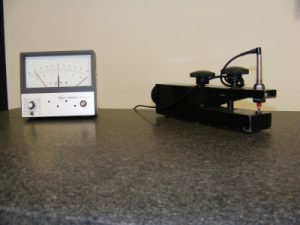
Idan ka gwada ko ƙwallon zagaye zai iya maimaitawa, to ka nuna cewa radius ɗin ƙwallon bai canza ba. (Mafi kyawun bayanin farantin da aka gyara da kyau yana da siffar kambi mai lanƙwasa.) Duk da haka, a bayyane yake cewa ƙwallon ba ta da faɗi. To, kamar. A ɗan gajeren nesa, tana da faɗi. Tunda yawancin aikin dubawa ya ƙunshi ma'aunin tsayi kusa da ɓangaren, maimaitawa ya zama mafi mahimmancin siffa ta farantin granite. Ya fi mahimmanci cewa faɗin faɗin gaba ɗaya sai dai idan mai amfani yana duba madaidaiciyar sashi.
Tabbatar cewa ɗan kwangilar ku ya yi gwajin karatu mai maimaitawa. Faranti na iya samun karatu mai maimaitawa sosai saboda haƙuri amma har yanzu ya ci jarrabawar lanƙwasa! Abin mamaki, dakin gwaje-gwaje na iya samun takardar shaidar gwaji wanda ba ya haɗa da gwajin karatu mai maimaitawa. Dakin gwaje-gwajen da ba zai iya gyarawa ko kuma bai ƙware sosai a gyara ba ya fi son yin gwajin lanƙwasa kawai. Lanƙwasa ba kasafai yake canzawa ba sai dai idan kun motsa farantin.
Gwajin karatu mai maimaitawa shine mafi sauƙin gwadawa amma mafi wahalar cimmawa yayin lanƙwasawa. Tabbatar cewa mai kwangilar ku zai iya dawo da maimaitawa ba tare da "rufe" saman ko barin raƙuman ruwa a saman ba.
Gwajin Delta T
Wannan gwajin ya ƙunshi auna zafin jiki na dutsen a saman samansa da kuma ƙasansa da kuma ƙididdige bambancin, Delta T, don bayar da rahoto kan takardar shaidar.
Yana da mahimmanci a san matsakaicin ma'aunin faɗaɗa zafi a cikin granite shine 3.5 uIn/Inci/digiri. Yanayin zafi da danshi na yanayi akan farantin granite ba su da yawa. Duk da haka, farantin saman zai iya fita daga haƙuri ko kuma wani lokacin ya inganta ko da a cikin digiri .3 – .5 na F Delta T. Ya zama dole a san ko Delta T yana cikin digiri .12 na F daga inda bambancin da aka yi da ma'aunin ƙarshe.
Yana da mahimmanci a san cewa saman aikin faranti yana ƙaura zuwa zafi. Idan zafin saman ya fi ƙasa zafi, to saman saman yana tashi. Idan ƙasan ya fi zafi, wanda ba kasafai yake ba, to saman saman zai nutse. Bai isa ga manajan inganci ko ma'aikacin fasaha ya san farantin yana da faɗi kuma ana iya maimaita shi a lokacin daidaitawa ko gyara ba, amma abin da Delta T yake a lokacin gwajin daidaitawa na ƙarshe. A cikin mawuyacin hali, mai amfani zai iya, ta hanyar auna Delta T da kansa, ya tantance ko farantin ya fita daga haƙuri saboda bambancin Delta T kawai. Abin farin ciki, granite yana ɗaukar sa'o'i da yawa ko ma kwanaki don daidaitawa da muhalli. Ƙananan canje-canje a zafin jiki na yanayi a cikin yini ba zai yi tasiri ba. Saboda waɗannan dalilai, ba ma bayar da rahoton zafin jiki ko danshi na yanayi ba saboda tasirin ba shi da yawa.
Tushen Farantin Dutse
Duk da cewa granite ya fi ƙarfe tauri, granite har yanzu yana haifar da ƙananan tabo a saman. Motsin sassa da ma'auni akai-akai a kan farantin saman shine babban tushen lalacewa, musamman idan yanki ɗaya ne ake amfani da shi akai-akai. Ƙura da ƙurar niƙa da aka bari a saman farantin suna hanzarta tsarin lalacewa yayin da yake shiga tsakanin sassa ko ma'auni da saman granite. Lokacin motsa sassa da ma'auni a samansa, ƙurar da ke lalata yawanci shine sanadin ƙarin lalacewa. Na ba da shawarar tsaftacewa akai-akai don rage lalacewa. Mun ga lalacewa a kan faranti sakamakon isar da kayan UPS na yau da kullun a saman faranti! Waɗannan wuraren lalacewa na gida suna shafar gwajin maimaitawa. Guji lalacewa ta hanyar tsaftacewa akai-akai.
Tsaftace Farantin Granite
Domin tsaftace farantin, yi amfani da kyallen manne don cire tsatsa. Kawai a danna shi kaɗan, don kada a bar ragowar manne. Zane mai kyau da aka yi amfani da shi yana aiki mai kyau wajen ɗaukar ƙurar niƙa tsakanin tsaftacewa. Kada a yi aiki a wuri ɗaya. Matsar da saitin ku a kusa da farantin, kuna rarraba lalacewa. Yana da kyau a yi amfani da barasa don tsaftace farantin, amma ku sani cewa yin hakan zai sanyaya saman na ɗan lokaci. Ruwa da ƙaramin sabulu yana da kyau. Masu tsaftacewa da ake samu a kasuwa kamar masu tsabtace Starrett suma suna da kyau a yi amfani da su, amma a tabbata an cire duk ragowar sabulun daga saman.
Gyaran Farantin Granite
Ya kamata a bayyana a yanzu mahimmancin tabbatar da cewa mai kwangilar farantin saman ku ya yi ingantaccen ma'auni. Dakunan gwaje-gwaje na "Gidan Tsaftace" waɗanda ke ba da shirye-shiryen "Yi duk da kira ɗaya" ba kasafai suke da ƙwararren ma'aikaci wanda zai iya yin gyare-gyare ba. Ko da suna ba da gyare-gyare, ba koyaushe suke da ƙwararren ma'aikaci wanda ke da ƙwarewar da ake buƙata ba lokacin da farantin saman ya fita daga jurewa sosai.
Idan aka ce ba za a iya gyara farantin ba saboda lalacewarsa, kira mu. Wataƙila za mu iya gyara shi.
Masu fasaha namu suna aiki na tsawon shekara ɗaya zuwa ɗaya da rabi a ƙarƙashin Babban Mai Fasaha na Faranti na Sama. Muna ayyana Babban Mai Fasaha na Faranti na Sama a matsayin wanda ya kammala aikin koyon aiki kuma yana da fiye da shekaru goma na ƙwarewa a daidaita da gyara Faranti na Sama. Mu a Dimensional Gauge muna da manyan ma'aikata uku waɗanda ke da ƙwarewar sama da shekaru 60 a hade. Ɗaya daga cikin manyan masu fasaha namu yana samuwa a kowane lokaci don tallafi da jagora don lokacin da yanayi mai wahala ya taso. Duk masu fasaha namu suna da ƙwarewa a daidaita faranti na sama na kowane girma, daga ƙanana zuwa babba, yanayin muhalli daban-daban, masana'antu daban-daban, da kuma matsalolin lalacewa.
Fed Specs suna da takamaiman buƙatun gamawa na 16 zuwa 64 Matsakaicin Raughness na Lissafi (AA). Mun fi son gamawa a cikin kewayon 30-35 AA. Akwai isasshen ƙarfi don tabbatar da cewa sassa da ma'auni suna tafiya cikin sauƙi kuma ba sa mannewa ko murƙushewa a kan farantin saman.
Idan muka gyara, muna duba farantin don ganin ko an ɗaura shi da kyau da kuma daidaita shi. Muna amfani da hanyar busar da shi, amma idan akwai lalacewa mai tsanani da ke buƙatar cire dutse mai yawa, muna jika shi. Masu fasaha namu suna tsaftace kansu, suna da kyau, sauri da daidaito. Wannan yana da mahimmanci saboda farashin gyaran farantin dutse ya haɗa da lokacin hutu da asarar samarwa. Gyaran da ya dace yana da matuƙar muhimmanci, kuma bai kamata ku taɓa zaɓar ɗan kwangila bisa farashi ko dacewa ba. Wasu ayyukan daidaitawa suna buƙatar ƙwararrun mutane. Muna da hakan.
Rahotannin Daidaitawa na Ƙarshe
Ga kowane gyaran da daidaita farantin saman, muna ba da cikakkun rahotannin ƙwararru. Rahotanninmu suna ɗauke da muhimman bayanai da suka shafi hakan. Fed Spec. yana buƙatar mafi yawan bayanan da muka bayar. Banda waɗanda ke cikin wasu ƙa'idodi na inganci kamar ISO/IEC-17025, mafi ƙarancin Fed. Takaddun bayanai na rahotanni sune:
- Girman a Ft. (X' x X')
- Launi
- Salo (Yana nufin babu matsewa ko layuka biyu ko huɗu)
- Kimanta Modulus na Ragewa
- Matsakaicin Juriyar Sama (An ƙayyade ta hanyar Daraja/Girma)
- Maimaita karatu Juriya (An ƙayyade ta hanyar tsawon diagonal a inci)
- Jirgin Sama Mai Ma'ana Kamar Yadda Aka Samu
- Ma'anar jirgin sama kamar hagu
- Maimaita karatu kamar yadda aka samu
- Maimaita karatu kamar yadda aka hagu
- Delta T (Bambancin zafin jiki tsakanin saman sama da ƙasa)
Idan ma'aikacin fasaha yana buƙatar yin aikin lapping ko gyara a kan farantin saman, to takardar shaidar daidaitawa za ta kasance tare da zane mai siffar ƙasa ko isometric don tabbatar da ingantaccen gyara.
Bayani Game da Takaddun Shaida na ISO/IEC-17025 da kuma dakunan gwaje-gwajen da ke da su
Kawai saboda dakin gwaje-gwaje yana da takardar shaidar daidaita farantin saman ba lallai bane ya san abin da yake yi ba sai dai yin sa daidai! Kuma ba lallai bane dakin gwaje-gwajen ya iya gyarawa. Hukumomin tantancewa ba sa bambanta tsakanin tantancewa ko daidaitawa (gyara).Akuma na san ɗaya, wataƙila2hukumomin amincewa da za suLtayeAIdan na biya su isassun kuɗi! Abin baƙin ciki ne. Na ga dakunan gwaje-gwaje suna samun izini ta hanyar yin gwaje-gwaje guda ɗaya kawai daga cikin gwaje-gwaje uku da ake buƙata. Bugu da ƙari, na ga dakunan gwaje-gwaje suna samun izini ba tare da rashin tabbas ba kuma ana samun izini ba tare da wata shaida ko nuna yadda suka ƙididdige ƙimar ba. Abin takaici ne.
Takaddama
Ba za ka iya raina rawar da faranti na granite suke takawa ba. Ma'aunin da faranti na granite ke bayarwa shine ginshiƙin da kake yin duk sauran ma'auni a kai.
Za ka iya amfani da kayan aikin aunawa na zamani, mafi daidaito da kuma mafi sauƙin amfani. Duk da haka, ma'auni daidai yana da wuya a tantance ko saman ma'auni ba shi da faɗi. Wani lokaci, na sami wani abokin ciniki da zai iya ce mini "to kawai dutse ne!" Amsata, "To, ka yi daidai, kuma tabbas ba za ka iya ba da hujjar cewa ƙwararru sun zo don kula da faranti na saman ba."
Farashi ba dalili ba ne mai kyau na zaɓar 'yan kwangilar farantin saman. Masu siye, masu lissafin kuɗi da kuma yawan injiniyoyi masu inganci ba koyaushe suke fahimtar cewa sake tabbatar da farantin granite ba kamar sake tabbatar da micrometer, caliper ko DMM ba ne.
Wasu kayan aiki suna buƙatar ƙwarewa, ba ƙarancin farashi ba. Bayan faɗin haka, farashinmu yana da ma'ana sosai. Musamman don samun tabbacin cewa muna yin aikin daidai. Mun wuce buƙatun ISO-17025 da ƙayyadaddun bayanai na Tarayya a cikin ƙarin ƙima.
Faranti na saman su ne ginshiƙin ma'aunin girma da yawa, kuma kula da farantin saman ku yadda ya kamata yana da mahimmanci don tabbatar da daidaiton ma'auni.
Granite shine kayan da aka fi amfani da su don faranti na saman saboda kyawawan halayensa na zahiri, kamar taurin saman da ƙarancin amsawa ga canjin yanayin zafi. Duk da haka, tare da ci gaba da amfani da faranti na saman, faranti na saman suna fuskantar lalacewa.
Faɗi da maimaitawa dukkansu muhimman fannoni ne don tantance ko farantin yana samar da madaidaicin saman don samun ma'auni daidai ko a'a. An bayyana haƙurin ɓangarorin biyu a ƙarƙashin Bayanin Tarayya GGG-P-463C, DIN, GB, JJS... Faɗi shine ma'aunin nisa tsakanin mafi girman wuri (ƙasa da rufin) da mafi ƙanƙanta wuri (ƙasa da tushe) akan farantin. Maimaitawa yana ƙayyade ko za a iya maimaita ma'aunin da aka ɗauka daga yanki ɗaya a kan farantin gaba ɗaya a cikin haƙurin da aka ambata. Wannan yana tabbatar da cewa babu kololuwa ko kwari a cikin farantin. Idan karatun ba ya cikin jagororin da aka ambata, to ana iya buƙatar sake fasalin don dawo da ma'aunin cikin ƙayyadaddun bayanai.
Daidaita farantin saman da aka saba yi yana da mahimmanci don tabbatar da lanƙwasa da kuma maimaituwa akan lokaci. Rukunin auna daidaito a Cross an amince da shi don daidaita lanƙwasa farantin saman da kuma maimaituwa. Muna amfani da Tsarin Takaddun Shaida na Plate ɗin saman Mahr wanda ke ɗauke da:
- Moody da Binciken Bayanan martaba,
- Tsarin Isometric ko Lambobi,
- Matsakaicin Gudun da Yawa, da
- Ma'aunin atomatik bisa ga Ka'idojin Masana'antu.
Tsarin Mahr Computer Assisted Model yana ƙayyade duk wani karkacewa mai kusurwa ko layi daga matakin cikakke, kuma ya dace da cikakken bayanin martaba na faranti na saman.
Tazarar da ke tsakanin daidaitawa zai bambanta dangane da yawan amfani da shi, yanayin muhalli inda farantin yake, da kuma takamaiman buƙatun ingancin kamfanin ku. Kula da farantin saman ku yadda ya kamata na iya ba da damar tsawaita tazara tsakanin kowane daidaitawa, yana taimaka muku guje wa ƙarin farashin sake maimaitawa, kuma mafi mahimmanci yana tabbatar da cewa ma'aunin da kuka samu akan farantin daidai ne gwargwadon iko. Duk da cewa farantin saman yana da ƙarfi, kayan aiki ne na daidaito kuma ya kamata a yi la'akari da su kamar haka. Ga wasu abubuwa da za a yi la'akari da su game da kula da farantin saman ku:
- A tsaftace farantin, kuma idan zai yiwu a rufe shi idan ba a amfani da shi
- Bai kamata a sanya komai a kan farantin ba sai dai ma'auni ko guntu-guntu da za a auna.
- Kada a yi amfani da wuri ɗaya a kan farantin a kowane lokaci.
- Idan zai yiwu, a riƙa juya farantin lokaci-lokaci.
- Kiyaye iyakar nauyin farantinki
Tushen Granite Mai Daidaito Zai Iya Inganta Ayyukan Kayan Aikin Inji
Bukatu suna ƙaruwa koyaushe a fannin injiniyan injiniya gabaɗaya da kuma musamman a fannin gina kayan aikin injina. Samun daidaito da ƙimar aiki mai kyau ba tare da ƙara farashi ba ƙalubale ne da ke ci gaba da kasancewa masu gasa. Gadon kayan aikin injina muhimmin abu ne a nan. Saboda haka, masana'antun kayan aikin injina da yawa suna dogaro da dutse mai daraja. Saboda sigoginsa na zahiri, yana ba da fa'idodi bayyanannu waɗanda ba za a iya cimma su da ƙarfe ko siminti na polymer ba.
Granite wani dutse ne da ake kira dutsen mai zurfin aman wuta kuma yana da tsari mai yawa da kama da juna tare da ƙarancin faɗuwa, ƙarancin wutar lantarki da kuma rage girgizar ƙasa.
A ƙasa za ku gano dalilin da yasa ra'ayin gama gari cewa granite ya fi dacewa kawai a matsayin tushen injin don injunan aunawa masu haɗaka ya tsufa kuma dalilin da yasa wannan kayan halitta a matsayin tushen kayan aikin injina madadin ƙarfe ne mai matuƙar fa'ida koda don kayan aikin injina masu inganci.
Za mu iya ƙera sassan granite don motsi mai ƙarfi, sassan granite don injinan layi, sassan granite don ndt, sassan granite don xray, sassan granite don cmm, sassan granite don cnc, daidaiton granite don laser, sassan granite don sararin samaniya, sassan granite don matakan daidaito...
Babban Ƙarin Darajar Ba Tare da Ƙarin Kuɗi ba
Yawan amfani da dutse a fannin injiniyanci ba ya faruwa ne saboda karuwar farashin ƙarfe. Maimakon haka, hakan ya faru ne saboda ƙarin darajar kayan aikin injin da aka samu da gadon injin da aka yi da dutse yana yiwuwa a farashi mai rahusa ko kuma babu ƙarin kuɗi. Wannan ya tabbata ne ta hanyar kwatanta farashi na shahararrun masana'antun kayan aikin injina a Jamus da Turai.
Ba za a iya cimma babban riba a cikin kwanciyar hankali na thermodynamic, damƙar girgiza da daidaito na dogon lokaci da granite ya samar ba tare da amfani da ƙarfe ko gado na ƙarfe ba, ko kuma kawai a farashi mai tsada. Misali, kurakuran zafi na iya haifar da har zuwa kashi 75% na jimlar kuskuren injin, tare da diyya da software ke ƙoƙarin yi - tare da matsakaicin nasara. Saboda ƙarancin ƙarfinsa na zafi, granite shine mafi kyawun tushe don daidaito na dogon lokaci.
Tare da juriyar 1 μm, granite yana cika buƙatun lanƙwasa cikin sauƙi bisa ga DIN 876 don matakin daidaito 00. Tare da ƙimar 6 akan sikelin tauri 1 zuwa 10, yana da matuƙar tauri, kuma tare da takamaiman nauyinsa na 2.8g/cm³ kusan ya kai ƙimar aluminum. Wannan kuma yana haifar da ƙarin fa'idodi kamar ƙimar ciyarwa mafi girma, haɓaka axis mafi girma da kuma tsawaita rayuwar kayan aiki don kayan aikin yankan. Don haka, canjin daga gadon siminti zuwa gadon injin granite yana motsa kayan aikin injin da ake magana a kai zuwa babban aji dangane da daidaito da aiki - ba tare da ƙarin farashi ba.
Ingantaccen Tafin Halayyar Muhalli na Granite
Sabanin kayan aiki kamar ƙarfe ko ƙarfen siminti, ba sai an samar da dutse na halitta da makamashi mai yawa da amfani da ƙari ba. Ƙananan kuzari ne kawai ake buƙata don haƙa dutse da kuma gyaran saman ƙasa. Wannan yana haifar da kyakkyawan tasirin muhalli, wanda ko da a ƙarshen rayuwar injin ya wuce na ƙarfe a matsayin kayan aiki. Gadon granite na iya zama tushen sabuwar injin ko kuma a yi amfani da shi don dalilai daban-daban kamar yanke itace don gina hanyoyi.
Kuma babu ƙarancin albarkatun dutse. Dutse ne mai zurfi da aka samo daga magma a cikin ɓawon ƙasa. Ya 'girma' tsawon miliyoyin shekaru kuma yana samuwa da yawa a matsayin albarkatun ƙasa a kusan dukkan nahiyoyi, ciki har da dukkan Turai.
Kammalawa: Fa'idodi da yawa da aka nuna na dutse idan aka kwatanta da ƙarfe ko ƙarfen siminti sun tabbatar da karuwar sha'awar injiniyoyin injiniya don amfani da wannan kayan halitta a matsayin tushe don kayan aikin injin mai inganci da inganci. Cikakken bayani game da kaddarorin dutse, waɗanda suke da amfani ga kayan aikin injina da injiniyan injiniya, za a iya samu a cikin wannan labarin.
Ma'aunin maimaitawa shine auna yankunan da ke da faɗi. Bayanin Ma'aunin Maimaita ya bayyana cewa ma'aunin da aka ɗauka a ko'ina a saman faranti zai maimaita a cikin haƙurin da aka ƙayyade. Sarrafa lanƙwasa yankin yankin ya fi tauri fiye da lanƙwasa gabaɗaya yana tabbatar da canji a hankali a cikin bayanin lanƙwasa saman ta haka yana rage kurakuran gida.
Yawancin masana'antun, gami da samfuran da aka shigo da su daga ƙasashen waje, suna bin ƙa'idodin Tarayya na jure wa lanƙwasa gabaɗaya amma da yawa suna watsi da ma'aunin maimaitawa. Yawancin faranti masu ƙarancin daraja ko kasafin kuɗi da ake da su a kasuwa a yau ba za su ba da garantin maimaita ma'auni ba. Mai ƙera wanda ba ya ba da garantin maimaita ma'auni BA yana samar da faranti waɗanda suka cika buƙatun ASME B89.3.7-2013 ko Ƙa'idodin Tarayya GGG-P-463c, ko DIN 876, GB, JJS...
Dukansu suna da mahimmanci don tabbatar da daidaiton saman don ma'auni masu kyau. Tsarin lanƙwasa kaɗai bai isa ya tabbatar da daidaiton ma'auni ba. A matsayin misali, farantin saman dubawa na 36 X 48 A, wanda ya cika ƙayyadaddun lanƙwasa na .000300 kawai". Idan kayan da ake duba sun haɗu da kololuwa da yawa, kuma ma'aunin da ake amfani da shi yana cikin ƙasa, kuskuren ma'auni na iya zama cikakken haƙuri a yanki ɗaya, 000300"! A zahiri, zai iya zama mafi girma idan ma'aunin yana kan gangaren karkata.
Kurakurai na .000600"-.000800" na iya yiwuwa, ya danganta da tsananin gangaren, da tsawon hannun ma'aunin da ake amfani da shi. Idan wannan farantin yana da ƙayyadaddun Ma'aunin Maimaita na .000050"FIR to kuskuren ma'aunin zai zama ƙasa da .000050" ba tare da la'akari da inda aka ɗauki ma'aunin a kan farantin ba. Wata matsala, wacce galibi ke tasowa lokacin da wani ma'aikacin fasaha wanda ba shi da ƙwarewa ya yi ƙoƙarin sake buɗe farantin a wurin, shine amfani da Ma'aunin Maimaita kawai don tabbatar da farantin.
Kayan aikin da ake amfani da su don tabbatar da maimaitawa BA a tsara su don duba madaidaicin wuri ba. Idan aka saita su zuwa sifili a kan saman da ya lanƙwasa daidai, za su ci gaba da karanta sifili, ko wannan saman yana da faɗi daidai ko kuma mai lanƙwasa ko mai lanƙwasa 1/2"! Kawai suna tabbatar da daidaiton saman, ba lanƙwasa ba. Faranti ne kawai wanda ya dace da ƙayyadaddun faɗin faɗin wuri DA ƙayyadaddun ma'aunin maimaitawa ya cika buƙatun ASME B89.3.7-2013 ko Bayanin Tarayya GGG-P-463c.
Ask us about or flatness specification and repeat measurement promise by calling +86 19969991659 or emailing INFO@ZHHIMG.COM
Eh, amma za a iya tabbatar da su ne kawai don takamaiman yanayin zafin jiki a tsaye. Tasirin faɗaɗa zafi akan farantin na iya haifar da canji cikin daidaito fiye da haƙuri idan akwai canji a yanayin. A wasu lokuta, idan haƙurin ya yi tsauri sosai, zafin da aka sha daga hasken sama zai iya haifar da isasshen canjin yanayin a cikin sa'o'i da yawa.
Granite yana da ma'aunin faɗaɗa zafi na kusan inci .0000035 a kowace inci a kowace 1°F. Misali: Farantin saman 36" x 48" x 8" yana da daidaito na .000075" (1/2 na Grade AA) a matakin digiri na 0°F, saman da ƙasan suna da yanayin zafi iri ɗaya. Idan saman farantin ya yi zafi har zuwa inda ya fi 1°F zafi fiye da ƙasa, daidaiton zai canza zuwa .000275" convex! Saboda haka, ya kamata a yi la'akari da yin odar farantin da ya fi ƙarfin juriya fiye da Lab Grade AA idan akwai isasshen iko na yanayi.
Ya kamata a ɗora farantin saman a maki 3, wanda ya fi dacewa a sanya shi kashi 20% na tsawonsa daga ƙarshen farantin. Ya kamata a sanya tallafi biyu a cikin kashi 20% na faɗinsa daga ɓangarorin da suka yi tsayi, kuma sauran tallafin ya kamata ya kasance a tsakiya. Maki 3 ne kawai za su iya tsayawa a kan komai sai dai saman da ya dace.
Ya kamata a tallafa wa farantin a waɗannan wuraren yayin samarwa, kuma ya kamata a tallafa masa a waɗannan wurare uku kawai yayin amfani da shi. Ƙoƙarin tallafawa farantin a fiye da maki uku zai sa farantin ya sami goyon bayansa daga haɗuwa daban-daban na maki uku, waɗanda ba za su zama maki 3 iri ɗaya da aka tallafa masa a lokacin samarwa ba. Wannan zai haifar da kurakurai yayin da farantin ya karkata don ya dace da sabon tsarin tallafi. Duk tsayayyun ƙarfe na zhhimg suna da katakon tallafi da aka tsara don daidaita su da wuraren tallafi masu dacewa.
Idan farantin yana da kyau, daidaita daidai gwargwado yana da mahimmanci ne kawai idan aikace-aikacenku ya buƙaci hakan. Daidaitawa ba lallai bane don kiyaye daidaiton farantin da aka tallafa da kyau.
Me yasa Zabi Granite donTushen InjikumaSassan Tsarin Ma'auni?
Amsar ita ce 'eh' ga kusan kowace amfani. Fa'idodin dutse sun haɗa da: Babu tsatsa ko tsatsa, kusan ba ya gaurayawa, babu wani abu mai ramawa idan aka yi masa niƙa, tsawon lokacin lalacewa, aiki mai santsi, daidaito mafi girma, kusan ba shi da maganadisu, ƙarancin ingantaccen faɗaɗa zafi, da ƙarancin kuɗin kulawa.
Granite wani nau'in dutse ne mai kama da dutse mai kama da dutse wanda aka haƙa saboda ƙarfinsa, yawansa, juriyarsa, da kuma juriyarsa ga tsatsa. Amma granite kuma yana da amfani sosai - ba wai kawai murabba'ai da murabba'ai ba ne! A gaskiya ma, Starrett Tru-Stone yana aiki da ƙarfin gwiwa tare da sassan granite waɗanda aka ƙera su da siffofi, kusurwoyi, da lanƙwasa na kowane irin bambanci akai-akai - tare da kyakkyawan sakamako.
Ta hanyar fasahar sarrafa mu ta zamani, saman da aka yanke na iya zama mai faɗi sosai. Waɗannan halaye sun sa granite ya zama kayan da ya dace don ƙirƙirar tushen injina na musamman da kuma ƙirar musamman da abubuwan da ke cikin metrology. Granite shine:
wanda za a iya amfani da shi ta hanyar injina
daidai lebur idan aka yanke kuma aka gama
jure tsatsa
mai ɗorewa
mai ɗorewa
Kayan aikin granite suma suna da sauƙin tsaftacewa. Lokacin ƙirƙirar ƙira na musamman, tabbatar da zaɓar granite don fa'idodinsa mafi girma.
MATAKAN/ AIKIN CI GABA DA ƊAUKARWA
Granite ɗin da ZhongHui ke amfani da shi don samfuran farantin saman mu na yau da kullun yana da yawan quartz, wanda ke ba da juriya ga lalacewa da lalacewa. Launin Superior Black da Crystal Pink ɗinmu yana da ƙarancin shan ruwa, wanda ke rage yuwuwar daidaiton ma'aunin ku na tsatsa yayin da kuke kan faranti. Launin granite da ZhongHui ke bayarwa yana haifar da ƙarancin haske, wanda ke nufin ƙarancin wahalar ido ga mutanen da ke amfani da faranti. Mun zaɓi nau'ikan granite ɗinmu yayin da muke la'akari da faɗaɗa zafi don ƙoƙarin rage wannan ɓangaren.
AIKIN MUSAMMAN
Idan aikace-aikacenku ya buƙaci faranti mai siffofi na musamman, abubuwan da aka saka a zare, ramuka ko wasu injina, za ku so ku zaɓi kayan kamar Black Diabase. Wannan kayan halitta yana ba da ƙarfi mai kyau, rage girgiza mai kyau, da kuma ingantaccen injin.
Eh, idan ba su da lalacewa sosai. Tsarin masana'antarmu da kayan aikinmu suna ba da damar mafi kyawun yanayi don daidaita farantin da kuma sake yin aiki idan ya cancanta. Gabaɗaya, idan farantin yana cikin .001" na juriyar da ake buƙata, ana iya sake buɗe shi a wurin. Idan farantin ya lalace har ya wuce .001" saboda rashin haƙuri, ko kuma idan an yi masa rauni ko kuma an yi masa rauni sosai, to za a buƙaci a aika shi zuwa masana'anta don niƙa kafin a sake yin amfani da shi.
Ya kamata a yi taka tsantsan wajen zaɓar ƙwararren masani kan daidaita da sake fasalin ginin. Muna ƙarfafa ku da ku yi taka tsantsan wajen zaɓar sabis ɗin daidaita ginin. Ku nemi izini kuma ku tabbatar da cewa kayan aikin da ma'aikacin zai yi amfani da su suna da na'urar tantancewa ta ƙasa da za a iya bin diddiginsu. Yana ɗaukar shekaru da yawa don koyon yadda ake daidaita granite daidai.
ZhongHui yana ba da sauƙin sauyawa kan daidaitawar da aka yi a masana'antarmu. Aika faranti don daidaitawa idan zai yiwu. Ingancin ku da suna ya dogara ne akan daidaiton kayan aikin aunawa, gami da faranti na saman!
Faranti masu launin baƙi na samanmu suna da yawan da ya fi yawa kuma sun ninka har sau uku. Saboda haka, faranti da aka yi da baƙin ba ya buƙatar ya zama kauri kamar faranti mai girman iri ɗaya don samun juriya iri ɗaya ko mafi girma ga karkacewa. Rage kauri yana nufin ƙarancin nauyi da ƙarancin kuɗin jigilar kaya.
Yi hankali da wasu waɗanda ke amfani da ƙaramin dutse mai launin baƙi mai kauri iri ɗaya. Kamar yadda aka ambata a sama, halayen dutse mai launin dutse, kamar itace ko ƙarfe, sun bambanta dangane da abu da launi, kuma ba cikakken hasashen tauri, tauri, ko juriyar lalacewa ba ne. A gaskiya ma, nau'ikan dutse mai launin baƙi da diabase suna da laushi sosai kuma ba su dace da amfani da farantin saman ba.
A'a. Kayan aiki na musamman da horon da ake buƙata don sake yin aiki da waɗannan abubuwan suna buƙatar a mayar da su masana'anta don daidaitawa da sake yin aiki.
Eh. Yumbu da dutse suna da halaye iri ɗaya, kuma ana iya amfani da hanyoyin da ake amfani da su don daidaita da kuma daidaita dutse tare da kayayyakin yumbu. Yumbu yana da wahalar jujjuyawa fiye da dutse wanda ke haifar da tsada mai yawa.
Eh, muddin an saka kayan a ƙarƙashin saman. Idan kayan adon ƙarfe sun yi daidai da saman saman, ko kuma sama da saman, dole ne a sanya su a ƙasa kafin a iya lanƙwasa farantin. Idan ana buƙata, za mu iya samar da wannan sabis ɗin.
Eh. Ana iya haɗa kayan saka ƙarfe masu zare da ake so (Turanci ko ma'auni) a cikin farantin a wuraren da ake so. ZhongHui yana amfani da injunan CNC don samar da wuraren saka mafi tsauri a cikin +/- 0.005". Ga waɗanda ba su da mahimmanci, juriyar wurinmu ga kayan sakawa da aka zana shine ±.060". Sauran zaɓuɓɓuka sun haɗa da sandunan ƙarfe na ƙarfe da ramukan dovetail da aka ƙera kai tsaye cikin granite.
Saka-saken da aka haɗa su yadda ya kamata ta amfani da epoxy mai ƙarfi da kuma kyakkyawan aiki za su jure wa ƙarfin juyi da yankewa. A cikin wani gwaji na baya-bayan nan, ta amfani da saka-saken da aka zare 3/8"-16, wani dakin gwaje-gwaje mai zaman kansa ya auna ƙarfin da ake buƙata don cire saka-saken da aka haɗa da epoxy daga farantin saman. An gwada faranti goma. Daga cikin waɗannan goma, a cikin lokuta tara, granite ya karye da farko. Matsakaicin kaya a wurin da ya gaza shine fam 10,020 don granite launin toka da fam 12,310 don baƙi. A cikin akwati ɗaya inda saka-saken da aka cire daga farantin, nauyin da ke wurin da ya gaza shine fam 12,990! Idan wani yanki na aiki ya samar da gada a kan saka-saken kuma aka yi amfani da ƙarfin juyi mai ƙarfi, yana yiwuwa a samar da isasshen ƙarfi don karya granite ɗin. Saboda wannan dalili, ZhongHui ya ba da jagororin matsakaicin ƙarfin juyi mai aminci wanda za a iya amfani da saka-saken da aka haɗa da epoxy: https://www.zhhimg.com/standard-thread-inserts-product/
Eh, amma a masana'antarmu ce kawai. A masana'antarmu, za mu iya mayar da kusan kowace faranti zuwa yanayin 'sabo', yawanci akan ƙasa da rabin kuɗin maye gurbinsa. Ana iya gyara gefuna da suka lalace ta hanyar kwalliya, ana iya niƙa ramuka masu zurfi, ƙusoshi, da ramuka, kuma ana iya maye gurbin goyon bayan da aka haɗa. Bugu da ƙari, za mu iya gyara faranti ɗinku don ƙara yawan amfaninsa ta hanyar ƙara kayan aiki na ƙarfe mai ƙarfi ko zare da yanke ramuka ko lebe mai mannewa, bisa ga ƙayyadaddun buƙatunku.
Me Yasa Zabi Dutse?
Granite wani nau'in dutse ne mai kama da dutse wanda aka samar a Duniya shekaru miliyoyin da suka gabata. Tsarin dutsen mai kama da dutse ya ƙunshi ma'adanai da yawa kamar quartz wanda yake da matuƙar tauri kuma yana jure lalacewa. Baya ga tauri da juriyar lalacewa granite yana da kusan rabin adadin faɗaɗawa a matsayin ƙarfen siminti. Ganin cewa nauyinsa ya kai kusan kashi ɗaya bisa uku na ƙarfen siminti, granite yana da sauƙin sarrafawa.
Ga tushen injina da abubuwan da ke cikin metrology, launin baƙar fata shine launin da aka fi amfani da shi. Baƙar fata dutse yana da kaso mafi girma na quartz fiye da sauran launuka kuma, saboda haka, shine mafi wahalar sakawa.
Granite yana da araha, kuma saman da aka yanke na iya zama mai faɗi sosai. Ba wai kawai za a iya amfani da shi da hannu don cimma daidaito mai yawa ba, har ma ana iya yin gyaran fuska ba tare da motsa farantin ko tebur daga wurin ba. Aikin gyaran hannu ne gaba ɗaya kuma gabaɗaya yana da rahusa fiye da sake gyaran ƙarfe.
Waɗannan halaye suna yin dutse mai kyau don ƙirƙirar sansanonin injina na musamman da kuma sassan metrology kamar sufarantin saman dutse.
ZhongHui yana samar da samfuran dutse na musamman waɗanda aka ƙera don tallafawa takamaiman buƙatun aunawa. Waɗannan abubuwan da aka ƙera sun bambanta dagagefuna madaidaiciya tomurabba'ai ukuSaboda yanayin da dutse yake da shi,kayayyakinana iya samar da su gwargwadon girman da ake buƙata; suna da wahalar sawa kuma suna ɗorewa na dogon lokaci.
Abũbuwan amfãni na faranti na dutse
Mai ƙirƙira na Burtaniya Henry Maudsley ne ya tabbatar da muhimmancin aunawa a kan saman da babu matsala a cikinsa a shekarun 1800. A matsayinsa na mai ƙirƙira kayan aikin injina, ya ƙaddara cewa samar da sassa akai-akai yana buƙatar saman da ya dace don ma'auni mai inganci.
Juyin juya halin masana'antu ya haifar da buƙatar auna saman, don haka kamfanin injiniya Crown Windley ya ƙirƙiri ƙa'idodin masana'antu. Crown ne ya fara kafa ƙa'idodin faranti na saman a shekarar 1904 ta amfani da ƙarfe. Yayin da buƙata da farashin ƙarfe suka ƙaru, an binciki wasu kayan da za a yi amfani da su wajen auna saman.
A Amurka, wanda ya ƙirƙiri wani abu mai ban mamaki, Wallace Herman, ya tabbatar da cewa dutse mai duhu kyakkyawan madadin ƙarfe ne. Ganin cewa dutse ba shi da maganadisu kuma ba ya tsatsa, nan da nan ya zama wurin aunawa da aka fi so.
Farantin saman granite muhimmin jari ne ga dakunan gwaje-gwaje da wuraren gwaji. Ana iya ɗora farantin saman granite mai girman 600 x 600 mm a kan wurin tallafi. Tashoshin suna ba da tsayin aiki na 34” (0.86m) tare da maki biyar masu daidaitawa don daidaitawa.
Domin samun sakamako mai inganci da daidaito, farantin saman dutse yana da matuƙar muhimmanci. Ganin cewa saman yana da santsi kuma mai karko, yana ba da damar sarrafa kayan aiki a hankali.
Babban fa'idodin faranti na saman granite sune:
• Ba ya nuna haske
• Yana jure wa sinadarai da tsatsa
• Ƙarancin yawan faɗaɗawa idan aka kwatanta da ƙarfen keken siyayya don haka canjin zafin jiki ba ya shafar shi sosai
• Tauri da kuma tauri ta halitta
• Ba ya shafar saman idan an yi masa karce
• Ba zai yi tsatsa ba
• Ba maganadisu ba
• Mai sauƙin tsaftacewa da kulawa
• Ana iya yin gyare-gyare da sake gyara shimfidar wuri a wurin
• Ya dace da haƙa don saka kayan tallafi masu zare
• Babban rage girgiza
Ga shaguna da yawa, ɗakunan dubawa da dakunan gwaje-gwaje, ana dogara da faranti na dutse masu daidaito a matsayin tushen aunawa daidai. Domin kowace ma'auni ta layi ta dogara ne akan madaidaicin saman tunani wanda daga ciki ake ɗaukar ma'auni na ƙarshe, faranti na saman suna ba da mafi kyawun matakin tunani don duba aiki da tsara shi kafin a yi aiki. Hakanan su ne tushen da suka dace don yin ma'aunin tsayi da saman aunawa. Bugu da ƙari, babban matakin lanƙwasa, kwanciyar hankali, inganci gabaɗaya da aikin yi ya sa su zama kyakkyawan zaɓi don hawa tsarin aunawa na injiniya, lantarki da na gani mai zurfi. Ga kowane ɗayan waɗannan hanyoyin aunawa, yana da mahimmanci a kiyaye faranti na saman daidaitacce.
Maimaita Ma'auni da Faɗi
Ma'aunin lanƙwasa da maimaitawa suna da matuƙar muhimmanci don tabbatar da daidaiton saman. Za a iya ɗaukar lanƙwasa a matsayin dukkan maki a saman da ke cikin layuka biyu masu layi ɗaya, matakin tushe da kuma matakin rufin. Ma'aunin nisan da ke tsakanin jiragen shine cikakken lanƙwasa na saman. Wannan ma'aunin lanƙwasa yawanci yana ɗauke da haƙuri kuma yana iya haɗawa da ayyana maki.
An bayyana haƙurin latency na maki uku na yau da kullun a cikin ƙayyadaddun ƙayyadaddun tarayya kamar yadda aka ƙaddara ta hanyar dabara mai zuwa:
Matsayin Dakin Gwaji AA = (40 + diagonal² / 25) x 0.000001 inci (mai gefe ɗaya)
Darasin Dubawa A = Darasin Dakin Gwaji AA x 2
Ɗakin Kayan Aiki Daraja B = Daraja AA x 4
Baya ga lanƙwasa, dole ne a tabbatar da cewa za a iya maimaitawa. Ma'aunin maimaitawa aunawa ne na yankunan lanƙwasa na gida. Ma'auni ne da aka ɗauka a ko'ina a saman faranti wanda zai maimaita a cikin haƙurin da aka ambata. Sarrafa lanƙwasa na yankin zuwa ga juriya mai ƙarfi fiye da lanƙwasa gabaɗaya yana tabbatar da canji a hankali a cikin yanayin lanƙwasa na saman, ta haka rage kurakuran gida.
Domin tabbatar da cewa farantin saman ya dace da ƙayyadaddun ma'auni na lanƙwasa da maimaitawa, masana'antun faranti na saman dutse ya kamata su yi amfani da Bayanin Tarayya GGG-P-463c a matsayin tushen ƙayyadaddun su. Wannan ma'auni yana magance daidaiton ma'auni mai maimaitawa, halayen kayan granites na farantin saman, ƙarewar saman, wurin tallafi, tauri, hanyoyin dubawa da shigarwa na zare masu dacewa.
Kafin farantin saman ya lalace fiye da yadda aka tsara don faɗin faɗinsa, zai nuna ginshiƙai da suka lalace ko kuma suka yi kauri. Dubawa na wata-wata don kurakuran aunawa da aka maimaita ta amfani da na'urar auna karatu mai maimaitawa zai gano wuraren lalacewa. Na'urar auna karatu mai maimaitawa kayan aiki ne mai inganci wanda ke gano kuskuren gida kuma ana iya nuna shi akan na'urar ƙara girman lantarki mai girma.
Duba Daidaiton Faranti
Ta hanyar bin wasu ƙa'idodi masu sauƙi, saka hannun jari a cikin farantin saman dutse ya kamata ya daɗe na tsawon shekaru. Dangane da amfani da farantin, yanayin shago da kuma daidaiton da ake buƙata, yawan duba daidaiton farantin saman ya bambanta. Babban ƙa'ida ita ce sabon farantin ya sami cikakken gyarawa cikin shekara ɗaya da siyan sa. Idan ana amfani da farantin akai-akai, yana da kyau a rage wannan lokacin zuwa watanni shida.
Kafin farantin saman ya lalace fiye da yadda aka tsara don faɗin faɗinsa, zai nuna ginshiƙai da suka lalace ko kuma suka yi kauri. Dubawa na wata-wata don kurakuran aunawa da aka maimaita ta amfani da na'urar auna karatu mai maimaitawa zai gano wuraren lalacewa. Na'urar auna karatu mai maimaitawa kayan aiki ne mai inganci wanda ke gano kuskuren gida kuma ana iya nuna shi akan na'urar ƙara girman lantarki mai girma.
Shirin dubawa mai inganci ya kamata ya haɗa da duba akai-akai tare da na'urar sarrafa iska ta atomatik, wanda ke samar da ainihin daidaiton lanƙwasa da za a iya ganowa zuwa Cibiyar Ma'auni da Fasaha ta Ƙasa (NIST). Ana buƙatar cikakken daidaitawa daga masana'anta ko kamfani mai zaman kansa lokaci zuwa lokaci.
Bambanci Tsakanin Daidaitawa
A wasu lokuta, akwai bambance-bambance tsakanin daidaita farantin saman. Wani lokaci abubuwa kamar canjin saman da ya samo asali daga lalacewa, rashin amfani da kayan aikin dubawa daidai ko amfani da kayan aikin da ba a daidaita ba na iya haifar da waɗannan bambance-bambancen. Duk da haka, abubuwa biyu da suka fi yawa sune zafin jiki da tallafi.
Ɗaya daga cikin mahimman abubuwan da ke haifar da zafi shine zafin jiki. Misali, ana iya wanke saman da ruwan zafi ko sanyi kafin a daidaita shi kuma ba a ba shi isasshen lokaci don daidaita yanayin ba. Sauran abubuwan da ke haifar da canjin zafin jiki sun haɗa da iska mai sanyi ko zafi, hasken rana kai tsaye, hasken sama ko wasu hanyoyin zafi mai haske a saman farantin.
Haka kuma akwai iya samun bambance-bambance a yanayin zafin jiki na tsaye tsakanin hunturu da bazara. A wasu lokuta, ba a ba da isasshen lokaci ga farantin don daidaita yanayin bayan jigilar kaya ba. Yana da kyau a yi rikodin zafin jiki na tsaye a lokacin da aka yi ma'aunin.
Wani abu da ya zama ruwan dare gama gari da ke haifar da bambancin daidaitawa shine farantin da ba a tallafa masa yadda ya kamata ba. Ya kamata a tallafa farantin saman a wurare uku, wanda ya fi dacewa a sanya shi kashi 20% na tsawonsa daga ƙarshen farantin. Ya kamata a sanya tallafi biyu a cikin kashi 20% na faɗinsa daga ɓangarorin da suka yi tsayi, kuma sauran tallafin ya kamata a tsakiya.
Maki uku ne kawai za su iya tsayawa a kan komai sai dai saman da ya dace. Ƙoƙarin tallafawa farantin a fiye da maki uku zai sa farantin ya sami goyon bayansa daga haɗuwa daban-daban na maki uku, waɗanda ba za su zama maki uku iri ɗaya da aka tallafa masa a lokacin samarwa ba. Wannan zai haifar da kurakurai yayin da farantin ya karkace don dacewa da sabon tsarin tallafi. Yi la'akari da amfani da sandunan ƙarfe tare da sandunan tallafi waɗanda aka tsara don daidaita su da wuraren tallafi masu dacewa. Ana samun tsayayyun tsaye don wannan dalili daga masana'antar farantin saman.
Idan farantin yana da kyau, daidaita daidai gwargwado yana da mahimmanci ne kawai idan aikace-aikacen ya ƙayyade shi. Daidaitawa ba lallai bane don kiyaye daidaiton farantin da aka tallafa da kyau.
Yana da mahimmanci a kiyaye tsabtar farantin. Kurar da ke lalata iska yawanci ita ce babbar hanyar lalacewa da tsagewa a kan farantin, domin yana da alaƙa da kayan aiki da kuma wuraren da aka taɓa na'urorin aunawa. Rufe farantin don kare su daga ƙura da lalacewa. Ana iya tsawaita tsawon lokacin lalacewa ta hanyar rufe farantin lokacin da ba a amfani da shi.
Tsawaita Rayuwar Farantin
Bin wasu ƙa'idodi zai rage lalacewa a kan farantin saman dutse kuma a ƙarshe, zai tsawaita rayuwarsa.
Da farko, yana da mahimmanci a kiyaye faranti mai tsafta. Kura mai gogewa daga iska yawanci ita ce babbar hanyar lalacewa da tsagewa a kan faranti, domin yana da alaƙa da kayan aiki da kuma saman taɓawa na ma'aunin.
Haka kuma yana da muhimmanci a rufe faranti domin kare su daga ƙura da lalacewa. Ana iya tsawaita tsawon lokacin lalacewa ta hanyar rufe faranti lokacin da ba a amfani da su.
A juya farantin lokaci-lokaci don kada a yi amfani da shi fiye da kima a wuri ɗaya. Haka kuma, ana ba da shawarar a maye gurbin murfin ƙarfe da faifan carbide.
A guji sanya abinci ko abin sha mai laushi a kan faranti. Yawancin abubuwan sha masu laushi suna ɗauke da sinadarin carbonic ko phosphoric acid, wanda zai iya narkar da ma'adanai masu laushi kuma ya bar ƙananan ramuka a saman.
Inda za a Komawa
Idan farantin saman dutse yana buƙatar sake fasalinsa, yi la'akari da ko za a yi wannan aikin a wurin ko a wurin daidaitawa. Ya fi kyau a sake haɗa farantin a masana'anta ko wani wuri na musamman. Amma, idan farantin bai yi laushi sosai ba, yawanci a cikin inci 0.001 na juriyar da ake buƙata, za a iya sake haɗa shi a wurin. Idan farantin ya yi laushi har ya wuce inci 0.001 ba tare da juriya ba, ko kuma idan ya yi rauni ko ya yi rauni sosai, to ya kamata a aika shi zuwa masana'anta don niƙa kafin a sake haɗa shi.
Wurin daidaitawa yana da kayan aiki da tsarin masana'anta wanda ke ba da mafi kyawun yanayi don daidaita farantin da sake yin aiki idan ya cancanta.
Ya kamata a yi taka tsantsan wajen zaɓar ma'aikacin gyaran fuska da sake gyara fuska a wurin. Nemi izini kuma a tabbatar da cewa kayan aikin da ma'aikacin zai yi amfani da su suna da na'urar tantancewa ta NIST. Kwarewa kuma muhimmin abu ne, domin yana ɗaukar shekaru da yawa don koyon yadda ake daidaita granite daidai.
Ma'aunin mahimmanci yana farawa da farantin saman dutse mai daidaito a matsayin tushe. Ta hanyar tabbatar da ingantaccen ma'auni ta amfani da farantin saman da aka daidaita yadda ya kamata, masana'antun suna da ɗaya daga cikin mahimman kayan aikin don ma'auni masu inganci da ingantattun sassa.
Jerin Abubuwan da Za a Yi Don Bambancin Daidaitawa
- An wanke saman da ruwan zafi ko sanyi kafin a daidaita shi kuma ba a ba shi isasshen lokaci don daidaita shi ba.
- Farantin ba a tallafa masa yadda ya kamata ba.
- Sauyin yanayi.
- Zane-zane.
- Hasken rana kai tsaye ko wani zafi mai zafi a saman farantin. Tabbatar cewa hasken da ke sama ba ya dumama saman.
- Bambancin yanayin zafin jiki tsakanin hunturu da bazara. Idan zai yiwu, san zafin yanayin zafin jiki a tsaye a lokacin da aka yi ma'aunin.
- Faranti ba a ba da isasshen lokaci don daidaita yanayin bayan jigilar kaya ba.
- Amfani da kayan aikin dubawa mara kyau ko amfani da kayan aikin da ba a daidaita su ba.
- Canjin saman da ya faru sakamakon lalacewa.
Nasihu kan Fasaha
Domin kowace ma'auni ta layi ta dogara ne akan madaidaicin saman tunani wanda daga ciki ake ɗaukar ma'auni na ƙarshe, faranti na saman suna ba da mafi kyawun tsarin tunani don duba aiki da tsara shi kafin a yi aiki.
Sarrafa lanƙwasa yankin gida zuwa ga juriya mai ƙarfi fiye da lanƙwasa gabaɗaya yana tabbatar da canji a hankali a cikin yanayin lanƙwasa saman, ta haka rage kurakuran gida.